
Consequences of a DUI in Florida: Penalties, Fines, and Defense Options
A DUI arrest in Florida can change your life in a matter of hours. Under Florida Statute 316.193, driving under the influence is proven by impairment of normal faculties or a blood alcohol level of .08 or above. The penalties are steep, starting with fines and license suspension for a first offense and escalating to felony prison time for repeat offenders. Whether you are facing your first DUI charge or a subsequent one in Miami-Dade or Broward County, understanding the full range of consequences is the first step toward protecting your freedom, your record, and your future. This guide covers every penalty tier, aggravating factors, recent law changes, common defenses, and what to do next.
What Qualifies as a DUI in Florida?
A DUI (driving under the influence) is an offense proven by either impairment of normal faculties or a blood or breath alcohol concentration of 0.08% or higher. "Normal faculties" include your ability to see, walk, judge distances, and drive safely. You do not need to be driving; Florida law only requires actual physical control of a vehicle.
Commercial drivers face a stricter 0.04% BAC threshold, while drivers under 21 can be charged at just 0.02%. Impairment by prescription medications or controlled substances also qualifies as DUI, even if the substance was legally prescribed. If you have been pulled over and are facing charges, speaking with a Miami DUI defense attorney immediately is critical.
First-Offense DUI Penalties
Even a first-time DUI in Florida carries mandatory consequences that a judge cannot waive. The minimum penalties include a conviction on your record, a fine between $500 and $1,000, a driver's license suspension of 180 days to one year, 50 hours of community service, mandatory DUI education, and up to 10 days of vehicle impoundment.
Jail Time for a First DUI
A first-offense DUI carries up to six months in jail. If your BAC was .15 or higher, or a minor was in the vehicle, that maximum increases to nine months. Many first-time offenders receive probation rather than incarceration, but jail time remains at the court's discretion.
Ignition Interlock Device
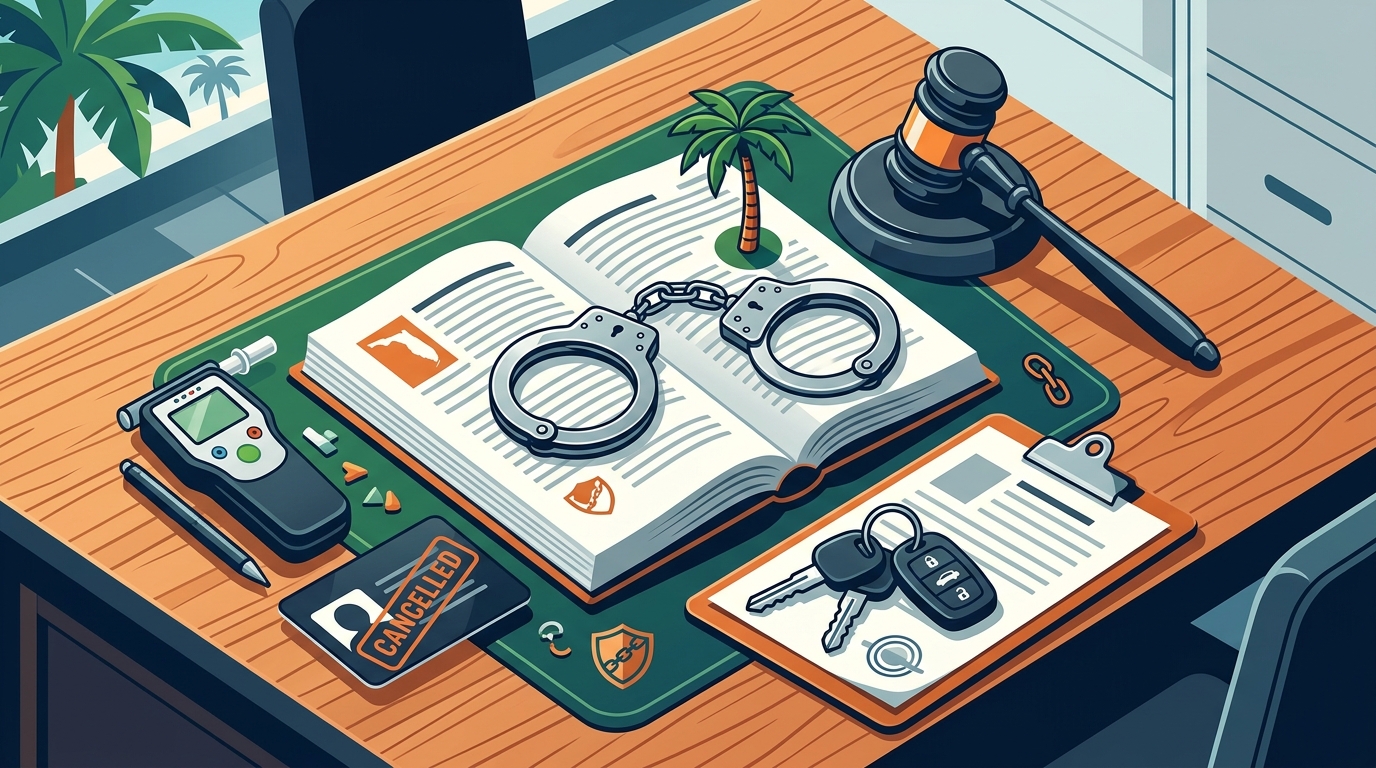
An ignition interlock device (IID) is an in-vehicle breathalyzer that prevents the car from starting if alcohol is detected. Courts may order a six-month IID installation even for a first offense, and it becomes mandatory when aggravating factors are present.
Penalties for Second, Third, and Fourth DUI Offenses
Florida dramatically increases penalties with each subsequent DUI conviction. The table below summarizes the key consequences by offense number.
| Offense | Fine Range | Max Jail/Prison | License Revocation | Vehicle Impound |
|---|---|---|---|---|
| 1st DUI | $500 - $1,000 | 6 months jail | 180 days - 1 year | 10 days |
| 2nd DUI (within 5 years) | $1,000 - $2,000 | 9 months jail (10-day mandatory minimum) | Minimum 5 years | 30 days |
| 3rd DUI (within 10 years) | $2,000 - $5,000 | 5 years prison (30-day mandatory minimum) | Minimum 10 years | 90 days |
| 4th+ DUI | Minimum $2,000 | 5 years prison | Permanent revocation | 90 days |
A third DUI within 10 years is classified as a third-degree felony in Florida, meaning you face state prison rather than county jail. A fourth or subsequent DUI is always a felony, regardless of when the prior offenses occurred. Understanding how repeat offender enhancements work in Florida is essential for anyone with prior convictions.
Aggravating Factors That Increase Penalties
Several circumstances trigger enhanced penalties under Florida law:
- High BAC (.15% or above): Fines double, jail maximums increase, and courts cannot reduce the DUI charge to a lesser offense.
- Minor passenger: Having a child under 18 in the vehicle triggers the same enhanced penalty tier as a high BAC.
- Property damage or injury: A DUI causing property damage or personal injury is a first-degree misdemeanor carrying up to $1,000 in additional fines and up to one year in jail.
- Serious bodily injury: This elevates the charge to a third-degree felony with up to five years in prison and a $5,000 fine.
- DUI manslaughter: Causing a death while driving under the influence is a second-degree felony punishable by four to 15 years in prison, up to $10,000 in fines, and permanent license revocation.
If you are facing charges involving any of these factors, the stakes are significantly higher. A criminal defense attorney in Miami can evaluate the specific evidence and develop a targeted strategy.
Driver's License Consequences
Florida operates a dual penalty system, meaning administrative license actions happen independently of criminal court proceedings. An arrest for DUI can trigger an immediate administrative suspension before you ever see a judge.
Administrative Suspension Timelines
If you submit to a breath test and register .08 or above, your license is suspended for six months on a first occurrence and one year for subsequent occurrences. Refusing a breath, blood, or urine test results in an automatic one-year suspension for the first refusal and 18 months for any subsequent refusal. You have only 10 days from the date of arrest to request a formal review hearing with the Florida DHSMV to challenge this suspension.
Losing your license affects every part of daily life. Learn more about how a driver's license defense attorney can help you fight to protect your driving privileges.
Trenton's Law: New Enhanced Penalties
Trenton's Law is a Florida statute that took effect on October 1, 2025, significantly expanding DUI penalties. The law was named after Trenton Stewart, an 18-year-old from St. Johns County who was killed by a wrong-way driver with a history of vehicular homicide in 2023.
Under Trenton's Law, refusing to submit to a breath or urine test after a DUI arrest is now a second-degree misdemeanor carrying a one-year license suspension. A second refusal becomes a first-degree misdemeanor with an 18-month suspension. The law also elevates repeat DUI manslaughter and vehicular homicide from a second-degree felony (maximum 15 years) to a first-degree felony, allowing sentences of up to 30 years.
These changes make it more important than ever to consult an attorney who stays current on Florida criminal law. Attorney Adam Goodman served on the Traffic Homicide Unit as a prosecutor, investigating cases ranging from vehicular homicide to DUI manslaughter, giving him direct insight into how these cases are built.
Common DUI Defense Strategies in Florida
A DUI charge is not an automatic conviction. Experienced defense attorneys regularly identify weaknesses in the State's case that can lead to reduced charges or dismissal.
Challenging the Traffic Stop
Law enforcement must have reasonable suspicion to pull you over. If the officer lacked a valid reason for the stop, all evidence obtained afterward may be suppressed. This is one of the strongest defenses in DUI cases.
Attacking Field Sobriety Exercises
Field sobriety tests are subjective and have well-documented accuracy limitations. Improper administration, poor road conditions, medical conditions, and officer bias can all undermine the reliability of these exercises.
Breathalyzer and Chemical Test Challenges
Breathalyzer machines require strict maintenance and calibration. Issues such as improper calibration, operator error, or medical conditions like acid reflux can produce inaccurate BAC readings. Blood test results can also be challenged based on chain-of-custody issues or contamination.
A skilled attorney may also negotiate charges down to reckless driving (sometimes called a "wet reckless"), which avoids a DUI conviction on your record. However, Florida law prohibits reducing DUI charges when BAC was .15% or higher. Explore all available sealing and expungement options to protect your long-term record.
Key Takeaways
- A first DUI in Florida carries fines of $500 to $1,000, up to six months in jail, and a license suspension of 180 days to one year.
- A third DUI within 10 years becomes a third-degree felony with up to five years in state prison.
- A fourth DUI results in permanent license revocation regardless of when prior offenses occurred.
- Trenton's Law (effective October 1, 2025) makes breath test refusal a criminal offense and raises DUI manslaughter penalties to up to 30 years for repeat offenders.
- Florida's administrative license suspension begins immediately upon arrest, separate from criminal court proceedings.
- Common defenses include challenging the traffic stop, attacking field sobriety test procedures, and contesting breathalyzer accuracy.
- Hiring an experienced DUI defense attorney quickly is critical because key deadlines begin within 10 days of arrest.
Frequently Asked Questions
Is a first DUI a felony in Florida?
No. A standard first-offense DUI is a misdemeanor in Florida. However, it becomes a felony if the DUI causes serious bodily injury or death.
How long does a DUI stay on your record in Florida?
A DUI conviction remains on your criminal record permanently in Florida. Unlike some other offenses, DUI convictions cannot be sealed or expunged under Florida law.
Can you refuse a breathalyzer test in Florida?
You can refuse, but there are consequences. As of October 1, 2025, refusing a breath or urine test after a DUI arrest is a second-degree misdemeanor. It also triggers an automatic one-year license suspension for a first refusal and 18 months for subsequent refusals.
What is the 10-day rule after a DUI arrest in Florida?
After a DUI arrest, you have only 10 days to request a formal review hearing with the Florida Department of Highway Safety and Motor Vehicles to challenge the administrative suspension of your license. Missing this deadline means automatic suspension.
Can a DUI be reduced to reckless driving in Florida?
Yes, in some cases an experienced attorney can negotiate a DUI charge down to reckless driving. However, Florida law prohibits reducing the charge if your BAC was .15% or higher.
What is DUI manslaughter in Florida?
DUI manslaughter is the charge when a person causes the death of another while driving under the influence. It is a second-degree felony carrying four to 15 years in prison. Under Trenton's Law, a second DUI manslaughter conviction is now a first-degree felony with up to 30 years.
Do I need a lawyer for a first-time DUI in Florida?
While not legally required, hiring a DUI defense attorney is strongly recommended. Florida DUI cases involve critical deadlines, complex evidence, and severe consequences that can follow you for life. An attorney can challenge the evidence, negotiate with prosecutors, and protect your rights at every stage.
Protect Your Future Today
If you or someone you know has been arrested for DUI in Miami-Dade, Broward County, or anywhere in South Florida, do not wait. Critical deadlines start running the moment you are arrested. Attorney Adam K. Goodman is a former Miami-Dade prosecutor who has handled DUI cases from both sides of the courtroom. Contact The Law Office of Adam K. Goodman at (305) 482-3265 for a free consultation to discuss your case and begin building your defense today.