

How to Find a Defense Attorney for a Domestic Violence Charge in Miami
Being charged with domestic violence in Miami can upend your life in a matter of hours. A no-contact order, potential jail time, and a permanent criminal record are all on the table before you even step into a courtroom. Florida reported over 106,000 domestic violence offenses in 2024 alone, and Miami-Dade County consistently ranks among the state's busiest jurisdictions for these cases. Choosing the right Miami domestic violence attorney is one of the most important decisions you will make. This guide walks you through every step of finding qualified legal representation.
Understand What You Are Facing
Domestic violence is any assault, battery, stalking, kidnapping, false imprisonment, or other criminal offense resulting in physical injury or death of one family or household member by another, as defined under Section 741.28 of the Florida Statutes. A household member can be a current or former spouse, someone related by blood or marriage, a person who resides or has resided with you, or a co-parent of a child.
Florida takes an aggressive stance on prosecution. Police responding to a domestic call are trained to make an arrest if they find probable cause, often before both sides of the story are heard. That is why early legal counsel is critical.
Why You Need a Specialized Defense Attorney
A criminal defense attorney is a lawyer who represents individuals accused of criminal offenses and works to protect their constitutional rights throughout the legal process. Not every criminal lawyer, however, has deep experience with the unique dynamics of domestic violence cases.
Domestic violence cases involve overlapping criminal proceedings, injunctions, and sometimes family court matters. A specialized attorney will understand how assault and battery charges interact with protective orders and custody disputes. They will also know the local prosecutors, judges, and diversion programs in Miami-Dade and Broward County courts.
Former Prosecutors Bring Unique Insight
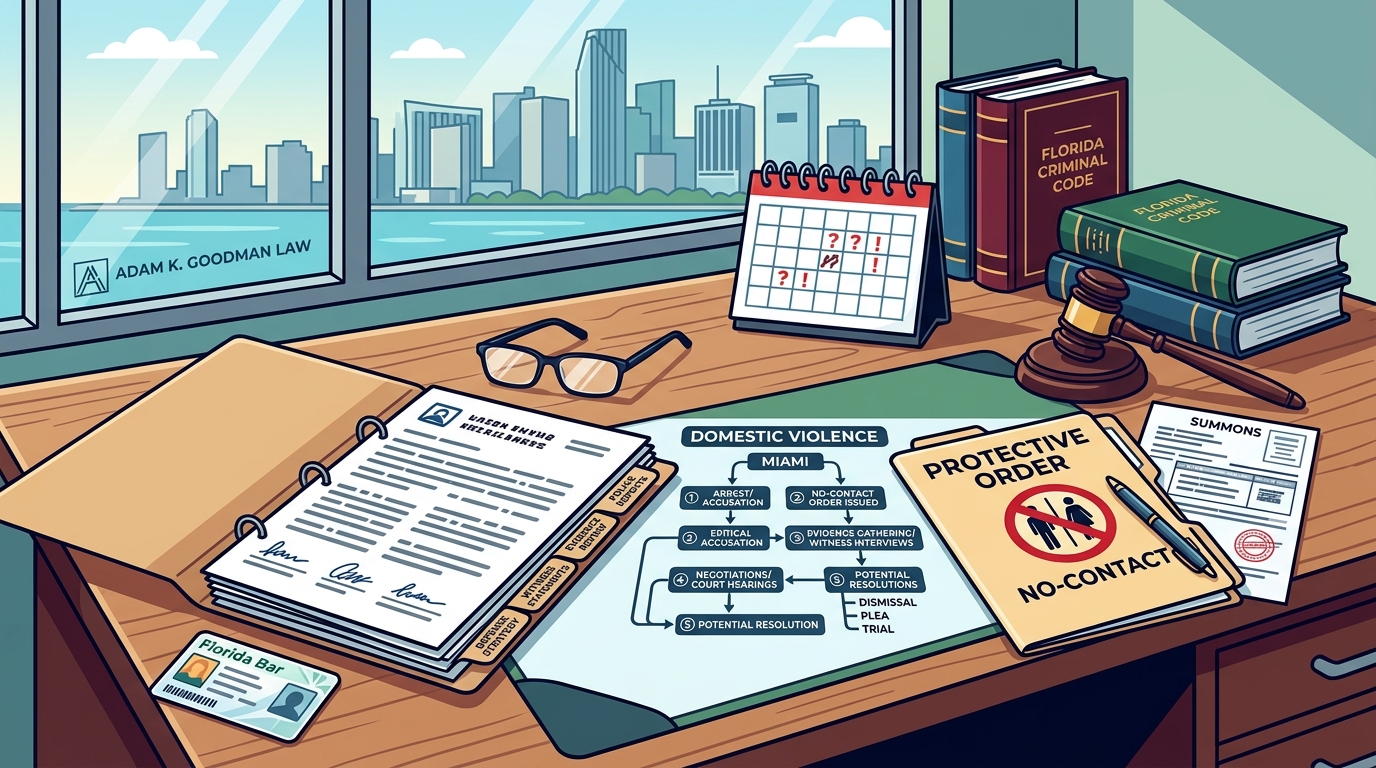
Attorneys who previously served as prosecutors understand how the State builds domestic violence cases from the inside. For example, Adam K. Goodman served as an Assistant State Attorney in Miami-Dade County for over six and a half years and was selected as Chief of Litigation for the Misdemeanor Domestic Violence Unit, where he trained over twenty attorneys on evidence rules and case-building strategy. That prosecutorial background translates directly into identifying weaknesses in the State's evidence.
Key Qualities to Look For
1. Exclusive Focus on Criminal Defense
Firms that handle personal injury, immigration, and criminal law simultaneously may spread resources thin. Look for a practice dedicated solely to criminal defense, where every team member focuses on protecting clients facing criminal charges.
2. Trial Experience
Many domestic violence cases are resolved through negotiation, but your attorney must be prepared and willing to go to trial. An attorney who has tried dozens of cases to verdict carries more weight at the negotiation table.
3. Knowledge of Local Courts
Miami-Dade County has its own specialized domestic violence court division. An attorney with established relationships in that division can navigate scheduling, plea options, and diversion programs more effectively.
Step-by-Step Process for Finding the Right Lawyer
Step 1: Research online. Start with practice-area pages, attorney bios, and client reviews. Verify that the attorney is a member of the Florida Bar in good standing.
Step 2: Check credentials and background. Prioritize attorneys who have prosecutorial experience, board certifications, or memberships in organizations like the Florida Association of Criminal Defense Lawyers.
Step 3: Schedule a consultation. Most reputable criminal defense firms offer a free initial consultation. Use this meeting to assess communication style, case strategy, and fee structure. Review the attorney's full background before the meeting.
Step 4: Ask targeted questions. How many domestic violence cases have you handled? What percentage went to trial? Have you worked in the Miami-Dade domestic violence court division? What is your approach to building a defense?
Step 5: Evaluate responsiveness. Criminal cases move quickly. Your attorney should be accessible and proactive about deadlines, court dates, and evidence discovery.
Domestic Violence Penalties in Florida
A batterer's intervention program is a state-certified course designed to address the behavior patterns underlying domestic violence offenses. Understanding the penalty landscape helps you appreciate why skilled representation matters.
| Charge Level | Maximum Jail/Prison | Maximum Fine | Additional Consequences |
|---|---|---|---|
| First-degree misdemeanor (e.g., domestic battery) | Up to 1 year in jail | $1,000 | Batterer's intervention program, probation, no-contact order |
| Third-degree felony (e.g., aggravated assault) | Up to 5 years in prison | $5,000 | Loss of firearm rights, potential prison sentence |
| Second-degree felony (e.g., aggravated battery) | Up to 15 years in prison | $10,000 | Mandatory minimum sentences possible |
Critically, a domestic violence conviction in Florida cannot be sealed or expunged from your record, even if adjudication is withheld. This makes an aggressive defense from the outset essential. Consequences extend beyond the courtroom to employment, housing, child custody, and future record-sealing eligibility.
Common Defense Strategies
A self-defense claim is a legal argument asserting that the accused used reasonable force to protect themselves from imminent harm. It is one of the most frequently raised defenses in domestic violence cases, allowing the accused to reframe the narrative around who was actually the aggressor.
Other strategies include challenging the credibility of witness testimony, demonstrating inconsistencies in the alleged victim's account, proving lack of physical evidence, and arguing that the incident does not meet the statutory definition of domestic violence. In some cases, evidence of voluntary counseling or treatment can serve as a mitigating factor during negotiations with prosecutors.
An experienced attorney will also examine whether law enforcement followed proper arrest procedures, since procedural errors can lead to suppression of evidence or dismissal of charges.
Key Takeaways
- Florida law treats domestic violence aggressively; over 106,000 offenses were reported statewide in 2024.
- A domestic violence conviction cannot be sealed or expunged from your Florida criminal record.
- Misdemeanor domestic battery alone can carry up to one year in jail and mandatory batterer's intervention.
- Look for an attorney with exclusive criminal defense focus, trial experience, and local court knowledge.
- Former prosecutors often have a strategic advantage in identifying weaknesses in the State's case.
- Schedule a free consultation to evaluate communication, strategy, and fit before hiring.
- Act quickly because early intervention by a defense attorney can shape the outcome of your case.
Frequently Asked Questions
What qualifies as domestic violence under Florida law?
Under Florida Statute 741.28, domestic violence includes any assault, aggravated assault, battery, aggravated battery, sexual assault, sexual battery, stalking, kidnapping, false imprisonment, or criminal offense resulting in physical injury or death of a family or household member by another household member.
Can a domestic violence charge be dropped if the victim does not want to press charges?
In Florida, the State Attorney's Office decides whether to prosecute. Even if the alleged victim recants or does not wish to proceed, prosecutors can move forward based on police reports, 911 calls, photographs, and witness statements.
What are the penalties for a first-time domestic violence offense in Miami?
A first-time misdemeanor domestic battery charge is punishable by up to one year in jail, up to one year of probation, a $1,000 fine, and mandatory completion of a 26-week batterer's intervention program. Additional consequences may include a no-contact order and loss of firearm rights.
How much does a domestic violence defense attorney cost in Miami?
Fees vary based on case complexity, the attorney's experience, and whether the case goes to trial. Many Miami criminal defense attorneys offer free initial consultations and flat-fee arrangements for misdemeanor cases. Always discuss the full fee structure before signing a retainer.
Will I go to jail if convicted of domestic violence in Florida?
Jail is a real possibility. Misdemeanor convictions can result in up to one year in jail, while felony convictions can lead to five or more years in state prison. A skilled defense attorney can work to reduce charges, negotiate alternatives, or secure an acquittal at trial.
Can I get a domestic violence charge expunged in Florida?
If you are convicted, no. Florida law prohibits sealing or expunging a domestic violence conviction. However, if charges are dismissed or you are found not guilty, you may be eligible to have the arrest record sealed or expunged.
Should I hire a former prosecutor for my domestic violence case?
A former prosecutor brings firsthand knowledge of how the State builds and presents domestic violence cases. This experience can be invaluable for identifying flaws in the prosecution's evidence and developing a strategic defense plan.
How quickly should I hire an attorney after a domestic violence arrest?
As soon as possible. Early involvement allows your attorney to preserve evidence, advise you on no-contact orders, prepare for your first court appearance, and potentially negotiate with prosecutors before formal charges are filed.
Protect Your Future Today
If you or someone you care about is facing a domestic violence charge in Miami-Dade or Broward County, do not wait. The Law Office of Adam K. Goodman offers a free consultation to review your case, explain your options, and begin building a defense strategy. Call (305) 482-3265 or (954) 695-5126 now to speak with a former prosecutor who understands both sides of the courtroom.