

Before speaking to federal agents in Miami, you must understand that your statements can be used against you in court. The federal system operates under strict rules that differ significantly from state law. You have the right to remain silent and the right to an attorney. The Law Office of Adam K. Goodman advises individuals to consult with a criminal defense attorney before any voluntary interview. This ensures your constitutional rights are protected from the very first interaction.
Federal vs. State Investigations
Federal criminal investigation is a process conducted by agencies such as the FBI, DEA, or IRS to gather evidence for potential federal prosecution. Unlike state police, federal agents have broader jurisdiction and resources. They can track communications across state lines and access national databases. In Miami, federal cases often involve complex issues like wire fraud, drug trafficking, or cybercrime. Understanding this distinction is critical because federal penalties are often more severe than state penalties. The federal system also has different procedural rules for evidence and sentencing.
Your Constitutional Rights
The Fifth Amendment is a constitutional provision that protects individuals from being compelled to incriminate themselves. This right applies to federal agents just as it does to local police. You are not required to answer questions about your involvement in a crime. However, agents may use psychological tactics to make you feel obligated to speak. They might claim that cooperation will help your case. This is a common misconception. Cooperation without legal counsel rarely helps and often hurts. You should always invoke your right to silence and request an attorney.
Grand Jury Subpoenas
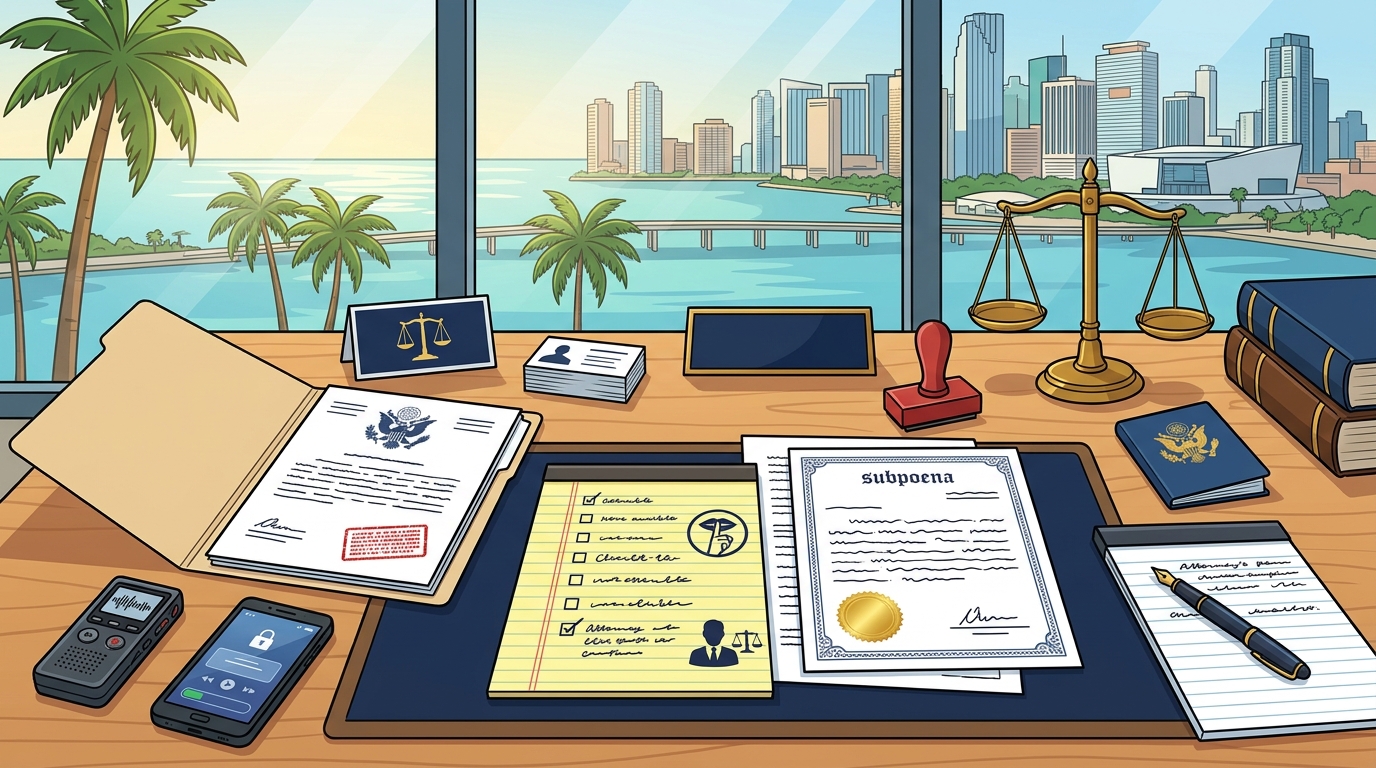
A grand jury subpoena is a legal order requiring you to appear and provide testimony or documents. Ignoring a subpoena can result in contempt of court charges. You must comply with the order, but you have the right to consult an attorney before appearing. Your attorney can negotiate the scope of the subpoena. They may also seek to quash or modify it if it is overly broad. In Miami, grand jury proceedings are secret. What you say in front of the grand jury is not public record. However, your testimony can be used in a subsequent trial if you are charged.
Agent Interview Tactics
Federal agents are trained to build rapport and lower your defenses. They may ask open-ended questions that seem harmless. For example, they might ask about your business practices or daily routine. These questions can later be used to establish a pattern of behavior. They may also present you with evidence that you are not required to acknowledge. If you admit to seeing or knowing about the evidence, you may be incriminating yourself. The Law Office of Adam K. Goodman emphasizes that you should never guess or speculate during an interview. If you do not know the answer, say so. If you are unsure, ask for your attorney.
Immediate Steps to Take
If you are contacted by federal agents, do not panic. Do not agree to an interview without legal advice. Do not sign any documents or waivers. Do not allow agents to search your home or office without a warrant. You have the right to refuse consent to a search. If agents arrive at your home, you can ask to see their warrant. If they do not have one, you can refuse entry. This is a critical step in protecting your privacy and your case. The Law Office of Adam K. Goodman provides immediate guidance for individuals facing federal inquiries in South Florida.
Key Takeaways
- Federal investigations are distinct from state investigations and carry higher stakes.
- You have the right to remain silent and the right to an attorney.
- Grand jury subpoenas must be taken seriously and handled with legal counsel.
- Agent interview tactics are designed to elicit incriminating statements.
- Never consent to a search without a valid warrant.
- Consult a criminal defense attorney before any interaction with federal agents.
Frequently Asked Questions
Can federal agents force me to talk to them?
No, federal agents cannot force you to talk to them. You have the right to remain silent. You can politely decline the interview and ask for your attorney. If you are not under arrest, you can leave the interview at any time.
What happens if I ignore a grand jury subpoena?
If you ignore a grand jury subpoena, you can be charged with contempt of court. This is a separate criminal offense. You must appear as required, but you can consult an attorney before doing so.
Do I need a lawyer if I am just a witness?
Yes, you should consult a lawyer even if you believe you are just a witness. The line between a witness and a suspect can blur quickly. A lawyer can help you understand your rights and protect you from making mistakes.
Can my attorney speak to the agents on my behalf?
Yes, your attorney can speak to the agents on your behalf. They can negotiate the terms of any interview or subpoena. They can also advise you on what to say and what to avoid.
What if agents come to my home?
If agents come to your home, you can ask to see their warrant. If they do not have a warrant, you can refuse entry. You do not have to let them in unless they have a valid warrant or your consent.
Protect Your Rights with Expert Guidance
Navigating a federal criminal investigation in Miami requires careful strategy and legal expertise. The Law Office of Adam K. Goodman provides dedicated representation for individuals facing federal inquiries. Adam K. Goodman is a former Miami-Dade prosecutor who understands how federal cases are built. To discuss your situation, contact our team today. Learn more: Criminal Defense Attorney Miami.