
Having a criminal record in Florida can create significant barriers to employment, housing, and professional licensing. According to recent data from the Bureau of Labor Statistics, individuals with criminal records face unemployment rates nearly double those of the general population. This statistic highlights the critical importance of understanding your legal options for record relief. In Miami-Dade County, the two primary mechanisms for achieving this relief are expungement and sealing. While these terms are often used interchangeably by the public, they have distinct legal definitions and eligibility criteria under Florida law. Navigating this process requires precise knowledge of statutory requirements and procedural deadlines.
What Is the Difference Between Expungement and Sealing?
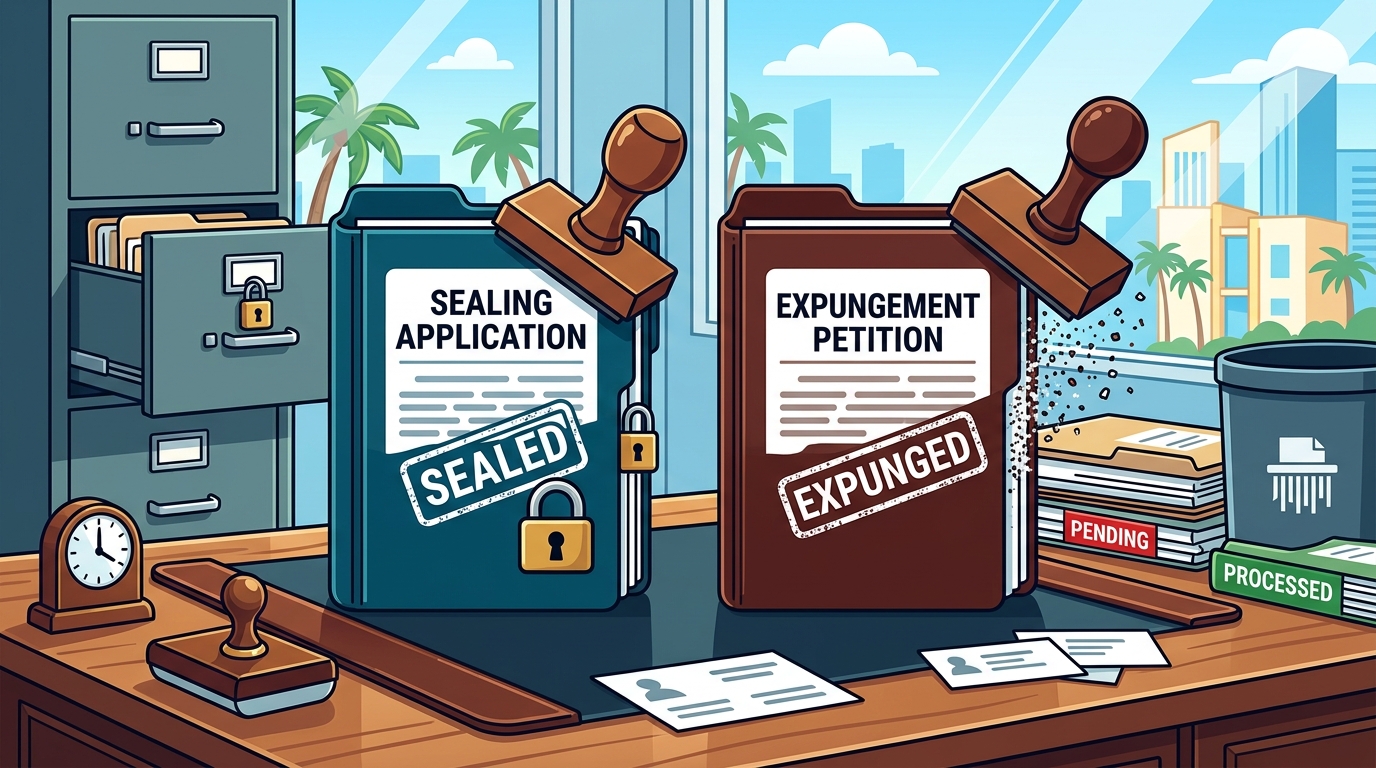
Understanding the distinction between these two legal remedies is the first step in securing your future. Expungement is the process by which law enforcement agencies and state repositories are required to physically destroy or seal their records of an arrest or charge. When a record is expunged, it is effectively erased from the state's criminal history database. However, it is important to note that the Federal Bureau of Investigation (FBI) may still retain a copy of the record, though access is strictly limited.
Sealing, on the other hand, does not destroy the record. Instead, it hides the record from the general public, private employers, and most licensing agencies. The record remains accessible to specific government entities, such as law enforcement, the Department of Children and Families, and certain regulatory boards. Both processes require a court order and a certificate of eligibility from the Florida Department of Law Enforcement (FDLE). For more details on the specific legal definitions, you can review the Sealing and Expunging practice area page.
Eligibility Requirements for Record Relief
Florida law is strict regarding who qualifies for record relief. The most fundamental requirement is that you must not have a prior criminal record in any jurisdiction. This means you cannot have been adjudicated guilty or found guilty of any crime, whether in Florida or another state. If you have a prior conviction, even for a minor misdemeanor, you are generally ineligible for both expungement and sealing.
Another critical factor is the disposition of your current case. You may be eligible if your case was dismissed by the State Attorney's Office. It is also possible to qualify if you received a Nolle Prosequi, which is a formal entry of dismissal by the prosecutor. In some instances, individuals who received an Acquitral may also seek relief, though this is less common. If you were found guilty but received a withhold of adjudication, you are typically not eligible for expungement or sealing, as a withhold is considered a conviction under Florida law.
Additionally, you must have never received a prior expungement or sealing of any criminal record in Florida or any other state. The law does not allow for multiple record relief orders. If you have previously had a record sealed or expunged, you are permanently barred from seeking this remedy again. For a deeper dive into the nuances of these requirements, visit the Attorney Bio page to learn about Adam K. Goodman's extensive experience in navigating these complex legal landscapes.
Disqualifying Offenses and Exceptions
Not all charges are eligible for record relief, regardless of the case outcome. Florida Statute 943.0585 lists specific offenses that disqualify an individual from receiving a certificate of eligibility. These include crimes of violence, sexual offenses, and offenses involving elder abuse or abuse of an incapacitated person. If your charge falls into any of these categories, you cannot proceed with an expungement or sealing application.
Furthermore, certain drug-related offenses may also disqualify you. For example, if you were charged with trafficking in controlled substances, you are generally ineligible. However, there are exceptions for minor drug possession charges in some contexts, but these are highly fact-specific. It is crucial to have a legal professional review your specific criminal history to determine if any disqualifying offenses apply. You can explore other Practice Areas to understand how different charges are handled.
There is also a time limit for applying for a certificate of eligibility. You must apply within 30 days of the completion of your sentence, including any probation or community service. If you miss this deadline, you may be permanently barred from seeking relief unless you can demonstrate good cause for the delay. This strict timeline underscores the importance of acting quickly after your case is resolved.
The Application Process: Step-by-Step
The process for sealing or expunging a record in Miami involves several distinct steps. First, you must apply for a Certificate of Eligibility from the Florida Department of Law Enforcement (FDLE). This application requires detailed personal information, a certified copy of your criminal history, and a fee. The FDLE will review your application and conduct a background check to ensure you meet all eligibility criteria.
Once you receive the Certificate of Eligibility, you must file a petition in the circuit court where your case was resolved. This petition must include the certificate, a proposed order, and a filing fee. The court will then review your petition and may schedule a hearing. If the court grants your petition, it will issue an order directing all relevant agencies to seal or expunge your records.
After the court order is issued, you must serve copies of the order to all agencies that hold your records. This includes the FDLE, the FBI, and any local law enforcement agencies involved in your case. Each agency has its own process for updating their records, and it is important to follow up to ensure compliance. For guidance on navigating these legal procedures, consider consulting with a Miami Appeals Attorney who understands the intricacies of post-conviction relief.
Costs, Fees, and Legal Representation
The cost of sealing or expunging a record can vary depending on several factors. The FDLE charges a non-refundable application fee, which is currently $75. Additionally, there are court filing fees, which can range from $400 to $500 depending on the county. If you need to obtain certified copies of your criminal history or court documents, there may be additional costs associated with those requests.
While it is possible to file for expungement or sealing pro se (without an attorney), the process is complex and error-prone. A single mistake in the application can result in denial, and once denied, you may not be able to reapply. Hiring an experienced criminal defense attorney can help ensure that your application is completed correctly and submitted on time. The Law Office of Adam K. Goodman offers free consultations to help you understand your options and the potential costs involved.
| Step | Description | Estimated Cost |
|---|---|---|
| FDLE Application | Apply for Certificate of Eligibility | $75 |
| Court Filing | File Petition in Circuit Court | $400 - $500 |
| Certified Records | Obtain Criminal History and Court Docs | $10 - $50 |
| Legal Fees | Attorney Representation (Varies) | Varies |
Key Takeaways
- Expungement vs. Sealing: Expungement destroys records, while sealing hides them from the public.
- No Prior Record: You must not have any prior convictions or adjudications of guilt to be eligible.
- Dismissed Cases: Eligibility often depends on the case being dismissed or having a Nolle Prosequi.
- Strict Deadlines: You must apply for a Certificate of Eligibility within 30 days of completing your sentence.
- Disqualifying Offenses: Certain violent and sexual offenses permanently disqualify individuals from relief.
- Legal Complexity: The process involves multiple agencies and strict procedural requirements.
- Professional Help: Hiring an experienced attorney can prevent costly errors and ensure timely submission.
Frequently Asked Questions
Can I seal my record if I was found guilty?
No, you generally cannot seal or expunge your record if you were found guilty or pleaded guilty. The law requires that the case be dismissed or result in an acquittal.
How long does the process take?
The FDLE review process can take several weeks to months. Once you have the certificate, the court process can take an additional few weeks to months depending on the court's schedule.
Will my record be completely gone?
Expungement physically destroys the record in state databases, but the FBI may retain a copy. Sealing hides the record from the public but it remains accessible to certain government agencies.
Can I apply if I have a prior conviction in another state?
No, having a prior conviction in any jurisdiction, including another state, typically disqualifies you from receiving a Certificate of Eligibility in Florida.
What is a Nolle Prosequi?
A Nolle Prosequi is a formal entry of dismissal by the prosecutor, indicating that they will not pursue the case further. This can make you eligible for record relief.
Do I need a lawyer to apply?
While not legally required, it is highly recommended due to the complexity of the process and the strict deadlines involved.
What if I miss the 30-day deadline?
If you miss the deadline, you may still apply if you can show good cause for the delay, but this is difficult to prove and requires legal expertise.
Contact a Miami Criminal Defense Attorney
Do not let a past mistake define your future. If you are eligible for expungement or sealing, taking action now can open doors to new employment and housing opportunities. The Law Office of Adam K. Goodman is dedicated to helping clients in Miami-Dade and Broward Counties navigate the complexities of record relief. As a former prosecutor, Adam K. Goodman understands how the state builds cases and how to effectively challenge them. Contact us today to schedule your free consultation and learn how we can help you move forward.