

Being arrested is a traumatic and disorienting experience that can instantly upend your life. In Miami-Dade County, the legal process moves quickly, and the decisions you make in the first few hours can determine the outcome of your case. Understanding the procedural timeline is not just about knowing your rights; it is about securing the aggressive defense you need to protect your future. According to recent data on local criminal justice processing, the average time between arrest and initial court appearance can vary significantly based on charge severity and court docket availability, making immediate legal intervention critical for preserving evidence and witness credibility.
The Immediate Arrest and Booking Process
When law enforcement in Miami-Dade County takes you into custody, the initial phase is governed by strict procedural protocols. Arrest is the legal seizure of a person by authority of law. This is distinct from a detention, which is a temporary stop for investigation. Once arrested, you are transported to a booking facility, such as the Miami-Dade Detention Center.
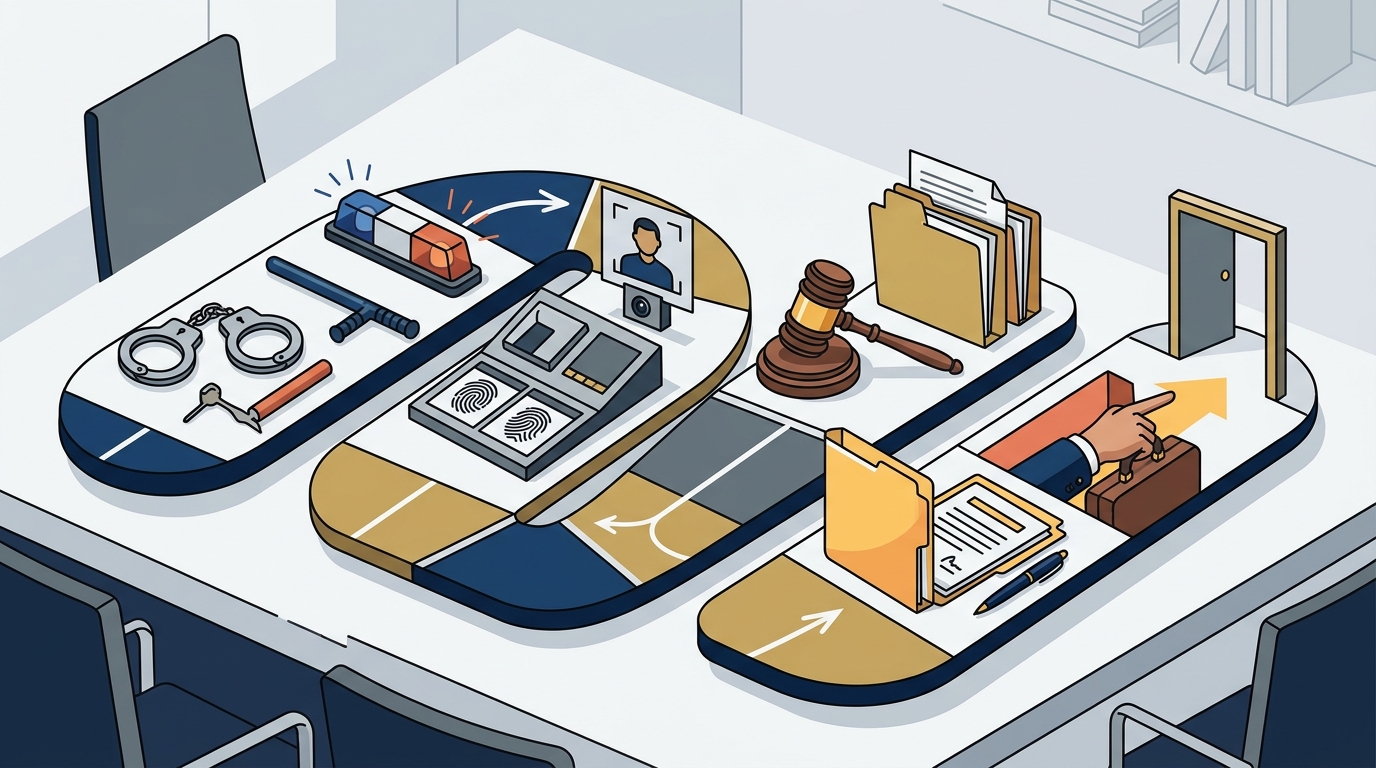
During booking, your personal information is recorded, fingerprints are taken, and a photograph (mugshot) is created. You will be searched for contraband and personal effects. It is vital to understand that anything you say to law enforcement during this phase can be used against you. The Fifth Amendment protects you from self-incrimination, but only if you explicitly invoke your right to remain silent. Self-incrimination is the act of giving evidence that could expose oneself to criminal prosecution.
At this stage, having an attorney present is crucial. An experienced lawyer can communicate with the police to ensure your rights are respected and begin gathering preliminary facts about the incident. For more details on specific charges like Assault and Battery, understanding the initial interaction with officers is the first step in building a defense.
Understanding Bond and Arthur Hearings
One of the most critical early stages in the Miami-Dade criminal justice system is the determination of your release status. This often involves a Bond Hearing or an Arthur Hearing, depending on the nature of the charges.
The Arthur Hearing
If you are charged with a capital felony or a first-degree murder charge, you are entitled to an Arthur Hearing. Named after the case State v. Arthur, this hearing determines whether there is sufficient evidence to bind you over for trial. The standard of proof here is lower than "beyond a reasonable doubt"; the state only needs to show that a crime was committed and that you committed it.
The Bond Hearing
For non-capital offenses, a bond hearing is held to determine the amount of money required for your release. The judge considers factors such as the severity of the crime, your criminal history, and the risk you pose to the community. Bond is a financial guarantee that the accused will appear for future court dates. If you cannot afford the bond, you may remain in jail until your case is resolved, which can put immense pressure on you to accept a plea deal.
Navigating these hearings requires precise legal argumentation. A former prosecutor, such as Adam K. Goodman, understands how to challenge the state's evidence to secure the lowest possible bond or even release on recognizance. Learn more about Bond Hearings and Arthur Hearings to understand your specific rights in these proceedings.
The First Appearance in Court
The First Appearance is typically held within 24 hours of your arrest. This is a preliminary hearing where a judge informs you of the charges against you and addresses your bond status. In Miami-Dade County, this process is often streamlined due to the high volume of cases, but it is not a trial. The state does not need to prove its case at this stage.
However, this is your first opportunity to have a judge review the legality of your arrest. If your attorney can demonstrate that the police violated your constitutional rights during the arrest, such as lacking probable cause, the charges may be suppressed or dismissed early. This is why immediate legal representation is non-negotiable. For insights into how appellate strategies might apply if errors occur at this stage, it is important to document every procedural detail from day one.
Arraignment and Entering a Plea
Following the First Appearance, you will be scheduled for an arraignment. This is a formal court proceeding where you are asked to enter a plea to the charges: guilty, not guilty, or no contest. An arraignment is the formal reading of charges and the entry of a plea by the defendant.
Most defense attorneys will advise entering a plea of "not guilty" at this stage. This preserves your right to a trial and prevents you from waiving any procedural defenses. Entering a guilty plea too early can forfeit your ability to challenge evidence or negotiate effectively later. The prosecution will likely offer a plea deal, but you should never accept one without a thorough review of the evidence by your counsel.
The Discovery Phase and Evidence Review
Once a not guilty plea is entered, the discovery phase begins. This is the process where the prosecution must turn over all evidence they have gathered against you. This includes police reports, witness statements, body camera footage, forensic lab results, and audio recordings.
Your attorney will meticulously review this material for inconsistencies, procedural errors, or constitutional violations. For example, if the police failed to read you your Miranda rights during a custodial interrogation, any statements you made may be inadmissible in court. This phase is where the real work of defense happens. It requires a deep understanding of Florida evidence rules and criminal procedure.
Pre-Trial Motions and Trial Strategy
Before a case goes to trial, either party may file pre-trial motions. Common motions include:
- Motion to Suppress: Arguing that evidence was obtained illegally and should be excluded.
- Motion to Dismiss: Arguing that the state lacks sufficient evidence to proceed.
- Motion for Change of Venue: Arguing that pre-trial publicity has made a fair trial impossible in the local jurisdiction.
If the case does not result in a dismissal or a favorable plea deal, it proceeds to trial. In Miami-Dade County, trials can be complex and lengthy. Your attorney must prepare witnesses, cross-examine prosecution witnesses, and present a coherent defense theory. For serious charges like Federal Crimes or White Collar Crime, the stakes are even higher, requiring specialized knowledge of federal statutes and sentencing guidelines.
Key Takeaways
- Immediate Silence: Invoke your right to remain silent immediately upon arrest. Do not speak to police without an attorney present.
- Bond is Critical: Secure the lowest possible bond through an Arthur or Bond Hearing to maintain your freedom while preparing your defense.
- First Appearance: This occurs within 24 hours and sets the initial tone for your case's trajectory.
- Discovery Review: The prosecution must provide all evidence; your attorney uses this to find flaws in their case.
- Not Guilty Plea: Always enter a not guilty plea at arraignment to preserve your rights and negotiation leverage.
- Experienced Counsel: A former prosecutor like Adam K. Goodman brings insider knowledge of how the Miami-Dade state attorney's office operates.
- Specialized Defense: Different charges, from Drug Charges to DUI, require tailored legal strategies.
Frequently Asked Questions
How long does it take to get out of jail after an arrest in Miami-Dade?
The time it takes to get out of jail depends on the bond amount and your ability to pay. If you are granted a bond hearing, it can happen within 24 to 48 hours. However, if the bond is set high, you may remain in custody for weeks or months until it is posted.
Do I need a lawyer if I am charged with a misdemeanor?
Yes. Even misdemeanor charges can result in jail time, fines, and a permanent criminal record. A lawyer can often get charges reduced or dismissed, which is impossible to do effectively on your own.
What is the difference between an Arthur Hearing and a Bond Hearing?
An Arthur Hearing is required for capital felonies to determine if there is enough evidence to proceed. A Bond Hearing determines the financial conditions of your release for non-capital offenses.
Can I speak to the police without my lawyer present?
You have the right to remain silent and the right to an attorney. Speaking to the police without your lawyer present can severely harm your defense, as anything you say can be used against you.
What happens if I cannot afford a lawyer?
If you cannot afford a private attorney, you may qualify for a public defender. However, public defenders are often overworked and may not have the time to devote to your case that a private specialist can.
How does the discovery process work in Florida?
The prosecution is legally required to provide all evidence, including exculpatory evidence, to the defense. This must be done within a specific timeframe after the not guilty plea is entered.
What are the penalties for assault and battery in Florida?
Assault is a second-degree misdemeanor punishable by up to 60 days in jail. Battery is a first-degree misdemeanor punishable by up to one year in jail. Aggravated circumstances can elevate these to felonies with much harsher penalties.
Contact a Miami Criminal Defense Attorney
If you or a loved one has been arrested in Miami-Dade County, time is of the essence. The decisions made in the first few hours can have lasting consequences. Do not navigate the complex criminal justice system alone. Contact the Law Offices of Adam K. Goodman for a free consultation. As a former Miami prosecutor, Adam K. Goodman brings unparalleled insight and aggressive defense strategies to every case.
Call (305) 482-3265 or (954) 695-5126 today. Visit our Contact Us page to schedule your appointment. Your future depends on the strength of your defense.