
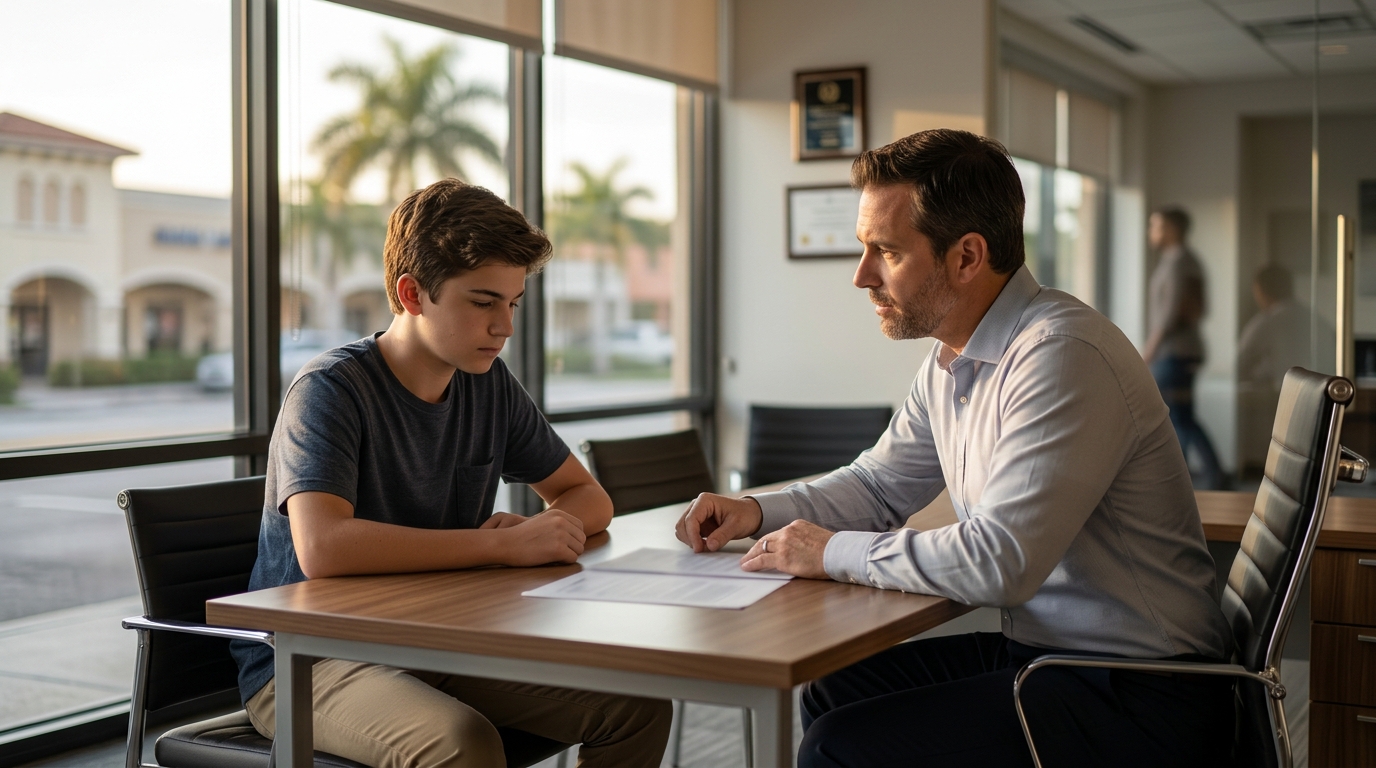
Being arrested for a juvenile crime in Hialeah is a traumatic event that can permanently alter a young person's future. In Florida, the juvenile justice system operates differently than the adult system, yet the stakes are equally high. A conviction can lead to detention, loss of driving privileges, and barriers to higher education. According to recent data on juvenile justice outcomes, early legal intervention significantly reduces the likelihood of long-term incarceration. This guide outlines the critical steps to hiring the right defense attorney to protect your child's constitutional rights and future.
Step 1: Recognize the Urgency of Immediate Legal Representation
The first step in protecting a minor is acting quickly. In Hialeah and Miami-Dade County, the juvenile justice process moves rapidly. A minor may be taken into custody during a bond hearing or an Arthur Hearing. These initial appearances determine whether the child remains in detention or is released to their parents or guardians. Delaying legal counsel can result in unfavorable bail conditions or missed opportunities to challenge the legality of the arrest.
Time is critical because evidence can disappear, witness memories fade, and procedural deadlines pass. An experienced attorney can intervene before formal charges are filed, potentially preventing the case from entering the system altogether. Immediate action signals to the prosecution that the family is serious about defending the minor's rights.
Step 2: Verify Specialized Juvenile Defense Experience
Not all criminal defense attorneys are equipped to handle juvenile cases. Juvenile law requires a nuanced understanding of Florida Statutes that specifically govern minors. Juvenile delinquency is the legal term for when a minor commits an act that would be a crime if committed by an adult. The procedures, evidentiary standards, and potential outcomes differ vastly from adult criminal court.
When evaluating potential attorneys, ask specifically about their track record with juvenile cases. Do they regularly appear in the juvenile division of the Miami-Dade County Courthouse? Do they understand the developmental psychology of adolescents? A former prosecutor with experience in juvenile litigation, such as Adam K. Goodman, brings a unique advantage. Having prosecuted juvenile cases, he knows how the state builds its argument and where the weaknesses often lie.
Step 3: Evaluate the Attorney's Local Court Relationships
Reputation and professional relationships matter in the Hialeah legal community. Attorneys who have built mutual respect with local prosecutors and judges can often negotiate better outcomes for their clients. This is not about "cutting corners" but about effective advocacy based on a deep understanding of local legal norms.
Look for an attorney who is recognized for their integrity and results. The Law Office of Adam K. Goodman emphasizes relationships, respect, and results as core pillars of their practice. This approach allows them to engage in productive negotiations with the State Attorney's office, potentially leading to diversion programs or reduced charges. A strong local presence ensures the attorney is familiar with the specific judges and prosecutors handling juvenile cases in Hialeah.
Step 4: Understand the Difference Between Juvenile and Adult Charges
One of the most critical steps is determining whether the minor will be tried as a juvenile or an adult. In Florida, certain serious offenses can trigger a transfer to adult court. If the minor is charged as an adult, the consequences are severe, including potential imprisonment in an adult facility and a permanent criminal record.
Your attorney must be skilled in filing motions to keep the case in juvenile court. They will argue for the minor's age, maturity, and the nature of the offense to ensure they are treated within the rehabilitative juvenile system. Understanding the career criminal enhancements that might apply is also vital. These enhancements can drastically increase sentencing if the minor has prior adjudications.
Step 5: Schedule a Confidential Consultation
Once you have identified potential candidates, schedule a consultation immediately. During this meeting, you will assess the attorney's communication style and their proposed strategy. Confidentiality is paramount in juvenile cases, as public records are often sealed, but the initial interaction must be handled with discretion.
Prepare questions for the attorney. Ask about their availability, their experience with the specific charge (e.g., assault and battery, drug charges, or domestic violence), and their approach to family involvement. A good attorney will listen to your concerns and explain the legal process in clear, non-technical language. They should also discuss the potential for sealing and expunging records in the future, which is a crucial long-term consideration for the minor.
Step 6: Review Fee Structures and Retainer Agreements
Legal fees vary widely depending on the complexity of the case. Some attorneys charge a flat fee for the entire case, while others bill by the hour. It is essential to have a clear understanding of the costs involved before signing any retainer agreement.
Ask for a detailed breakdown of fees. Are there additional costs for expert witnesses, investigators, or court filings? Transparency in billing is a sign of a professional practice. While cost is a factor, do not choose an attorney solely based on the lowest price. The quality of representation can have lifelong implications for your child. Consider the value of an attorney who can resolve the case efficiently and effectively.
Step 7: Commit to a Defense Strategy Focused on Rehabilitation
The ultimate goal in juvenile defense is often rehabilitation rather than punishment. A strong defense strategy may involve negotiating for diversion programs, community service, counseling, or educational classes. These alternatives can help the minor avoid a formal adjudication of delinquency.
Your attorney should work with you to present a compelling case for why the minor deserves a second chance. This might include character references, school records, and evidence of positive community involvement. By focusing on rehabilitation, you can help your child avoid the stigma of a criminal record and move forward with their life. For more information on post conviction relief and record clearance, consult with a legal professional.
Comparison of Defense Approaches
| Defense Approach | Primary Goal | Best For | Potential Outcome |
|---|---|---|---|
| Pre-Charge Intervention | Prevent formal charges | First-time offenders | No record, case dismissed |
| Diversion Programs | Avoid adjudication | Minor offenses | Completion leads to dismissal |
| Trial Defense | Acquittal or minimal sanctions | Serious charges | Not guilty or reduced charges |
| Appeals | Reverse wrongful conviction | Procedural errors | New hearing or dismissal |
Key Takeaways
- Immediate Action: Contact an attorney before the first court appearance to protect bail and rights.
- Specialization Matters: Ensure the attorney has specific experience with juvenile crimes in Florida.
- Local Expertise: An attorney familiar with Hialeah courts can navigate the system more effectively.
- Former Prosecutor Advantage: Insight from a former prosecutor like Adam K. Goodman provides a strategic edge.
- Rehabilitation Focus: Aim for diversion programs to avoid a permanent record.
- Transparency: Clear fee structures and honest communication are essential.
- Long-Term Planning: Consider future sealing and expunging options from the start.
Frequently Asked Questions
What is the age of criminal responsibility in Florida?
In Florida, children under the age of 4 cannot be held criminally responsible. For children between 4 and 18, the juvenile justice system applies, though serious offenses can lead to adult charges.
Can a juvenile's record be sealed or expunged?
Yes, in many cases, juvenile records can be sealed or expunged. However, eligibility depends on the nature of the offense and the outcome of the case. Sealing and expunging a record can open doors to employment and housing that might otherwise be closed.
How long does a juvenile case take?
The duration varies based on complexity and court backlog. Simple cases may be resolved in a few months, while complex trials can take over a year. Early legal intervention can help expedite the process.
What happens if my child is charged as an adult?
If charged as an adult, your child faces potential imprisonment in an adult facility and a permanent criminal record. An experienced attorney will fight to keep the case in juvenile court through motions and hearings.
Do I need a lawyer for a juvenile hearing?
Yes, having legal representation is crucial. Juvenile hearings involve complex legal procedures, and an attorney can ensure your child's rights are protected and advocate for the best possible outcome.
What is an Arthur Hearing?
An Arthur Hearing is a preliminary hearing in juvenile cases to determine if there is probable cause to believe the child committed the offense. It is a critical stage where legal arguments can influence the case's direction.
How can I find a reputable juvenile defense attorney in Hialeah?
Look for attorneys with specific experience in juvenile law, positive client reviews, and a strong local reputation. The Law Office of Adam K. Goodman offers specialized services for juvenile crimes in the Hialeah area.
Protect Your Child's Future Today
The consequences of a juvenile crime charge are severe and long-lasting. Do not face the legal system alone. Contact the Law Office of Adam K. Goodman for a confidential consultation. As a former Miami prosecutor, Adam K. Goodman brings unparalleled insight and dedication to defending your child's rights. Call (305) 482-3265 or (954) 695-5126 to get started.