

Having a criminal record in Florida can create significant barriers to employment, housing, and professional licensing. The process to seal or expunge a record is not automatic and requires strict adherence to Florida statutes. According to recent legal data, only a small fraction of eligible applicants successfully navigate the complex court procedures without professional assistance. This guide outlines the precise steps to clear your record with the Law Offices of Adam K. Goodman. (Criminal Defense Attorney Miami)
Understanding the Difference Between Sealing and Expunging
Many individuals in Miami confuse these two legal remedies. It is critical to understand the distinction before taking action. Sealing is the process where the record is hidden from the public and most private employers. However, government agencies and law enforcement can still access it. Expungement is more severe. It destroys the record entirely, as if the arrest never happened, with very few exceptions.
In Florida, the law treats these outcomes differently. A sealed record remains in the custody of the court and the Florida Department of Law Enforcement. An expunged record is physically destroyed or returned to the petitioner. The eligibility for each depends heavily on the nature of your DUI charge and your prior criminal history.
Checking Your Eligibility for Relief
Not everyone with a DUI charge can clear their record. Florida law is strict regarding criminal history. To be eligible, you generally must not have any prior criminal record in Florida or any other jurisdiction. This includes convictions, deferred adjudications, and withholdings of guilt.
If you have a prior conviction for any crime, including a DUI, you are likely ineligible for both sealing and expungement. There are very limited exceptions for minor misdemeanors that are unrelated to the current charge. However, DUI charges often carry specific statutory bars that prevent relief.
You must also ensure that you have not previously received a constitutional or statutory right to seal or expunge a record in Florida. The law allows only one such relief per lifetime. If you have used this right before, you cannot use it again. This is a permanent bar that cannot be waived by the court.
Obtaining a Consent Order from the State
Before you can file anything with the court, you must get permission from the State Attorney's Office. This is a critical step that many people overlook. You must submit a formal request to the State Attorney's office in the county where your case was handled. In Miami-Dade County, this is the 11th Judicial Circuit.
The State Attorney will review your case to determine if they will grant consent. They look at the severity of the offense, your criminal history, and the circumstances of the arrest. If they deny consent, you cannot proceed with sealing or expunging the record. This denial is final and cannot be appealed.
It is highly recommended to have an experienced attorney handle this request. A former prosecutor, such as Adam K. Goodman, understands how the State Attorney's office evaluates these requests. He can present your case in the most favorable light, increasing the chances of obtaining consent.
Filing the Petition with the Court
Once you have obtained the Consent Order from the State Attorney, you must file a Petition to Seal or Expunge with the court. This document must be completed accurately and filed in the county where your case was adjudicated. The filing fee is required at this stage, although it may be waived in some indigency cases.
The petition must include specific details about your case, including the case number, the charge, and the disposition. You must also provide a copy of the Consent Order. If the petition is not filed correctly, the court will dismiss it, and you will lose the filing fee. This is why precision is vital.
After filing, you must serve a copy of the petition to the State Attorney's office and the Florida Department of Law Enforcement. They will have a set period to respond to the petition. If they do not respond, the court may proceed to a hearing. If they object, a hearing will be scheduled to resolve the dispute.
Undergoing the Background Check
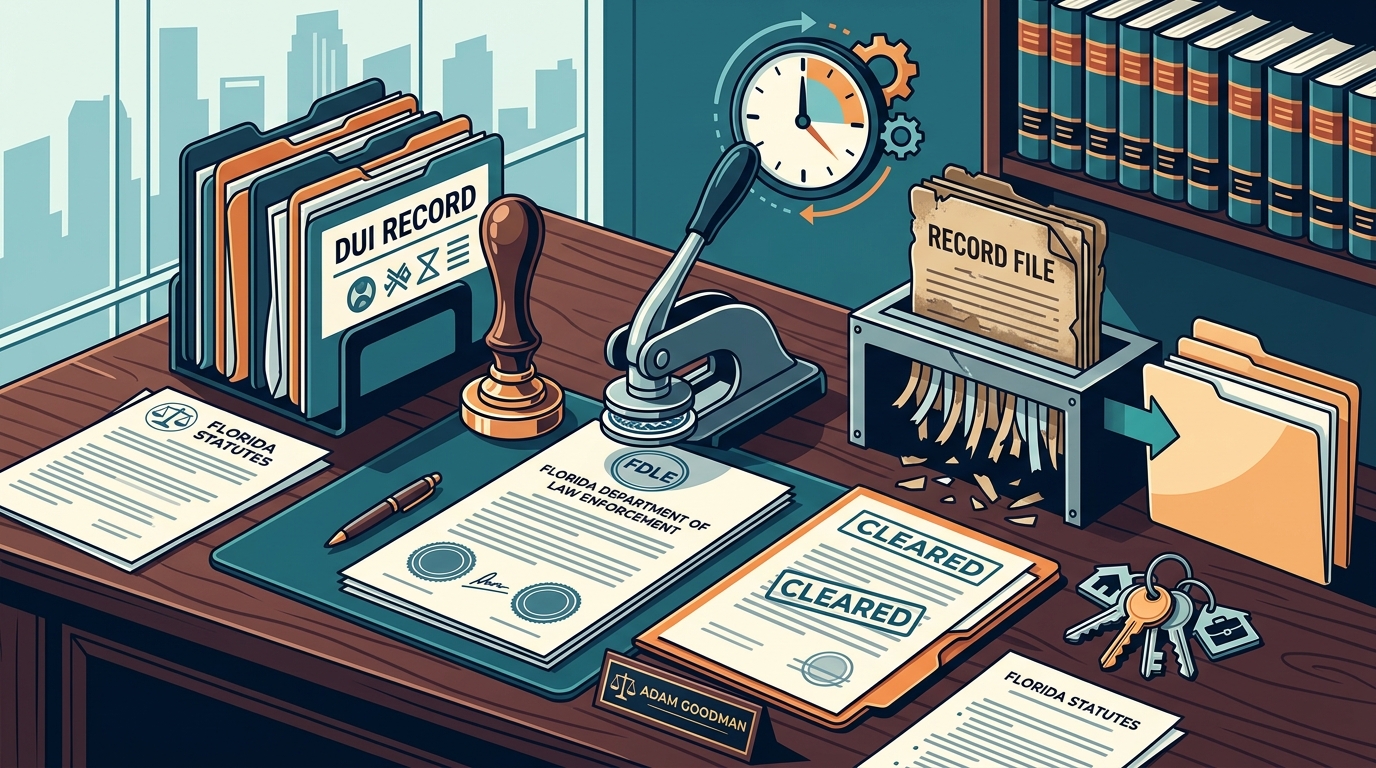
As part of the process, the court will order a comprehensive background check. This check is conducted by the Florida Department of Law Enforcement and the Federal Bureau of Investigation. The purpose is to verify that you have no other criminal history that would disqualify you from relief.
The background check looks for any arrests, convictions, or interactions with law enforcement that may not have been disclosed. If the background check reveals undisclosed criminal history, your petition will likely be denied. This is why honesty and thoroughness are essential in the initial stages of your consultation.
The background check process can take several weeks. During this time, you must avoid any new legal issues. Any new arrest or charge during this period will automatically disqualify you from sealing or expunging your record. You must maintain a clean record until the process is complete.
The Court Hearing and Final Judgment
If the State Attorney does not object to your petition, the court may grant your request without a hearing. However, if there is an objection, or if the judge requires further review, a hearing will be scheduled. At this hearing, you or your attorney must present arguments for why relief should be granted.
Your attorney will argue that you meet all statutory requirements and that granting relief is in the interest of justice. The prosecutor may argue against it, citing the severity of the offense or your criminal history. The judge will then make a final decision.
If the judge grants your petition, a final judgment will be entered. This judgment orders the sealing or expungement of your record. You must then provide copies of this judgment to all agencies that hold your record. This includes the court, the State Attorney, and the Florida Department of Law Enforcement.
Impact on Employment and Licensing
Once your record is sealed or expunged, you can legally state that you have not been arrested or convicted of that charge in most private employment applications. However, government agencies, law enforcement, and certain licensed professions may still have access to the record.
It is important to understand that sealing or expungement does not erase the record from the existence of the state. It merely restricts access. For most private employers, the record will appear as if it never existed. This can significantly improve your job prospects and housing opportunities.
Comparison of Sealing vs. Expungement
| Feature | Sealing | Expungement |
|---|---|---|
| Public Access | Hidden from public | Destroyed/Removed |
| Government Access | Yes, for law enforcement | Limited exceptions |
| Eligibility | More common | Stricter requirements |
| Legal Effect | Record exists but is hidden | Record treated as non-existent |
Key Takeaways
- Only one sealing or expungement is allowed per lifetime in Florida.
- Prior criminal convictions, including DUIs, often disqualify you from relief.
- You must obtain a Consent Order from the State Attorney before filing.
- The process requires a comprehensive background check by the FBI and FDLE.
- Sealing hides the record, while expungement destroys it.
- Government agencies and law enforcement can still access sealed records.
- Legal representation is crucial for navigating the complex statutory requirements.
Frequently Asked Questions
Can I seal or expunge a DUI conviction in Florida?
In most cases, no. Florida law prohibits the sealing or expungement of DUI convictions. You may only be eligible if you were arrested but not convicted, or if the charges were dropped or dismissed. A conviction is a final barrier to relief.
How long does the sealing or expungement process take?
The process can take several months. It involves obtaining consent from the State Attorney, filing the petition, undergoing a background check, and potentially attending a court hearing. The timeline depends on the court's docket and the complexity of your case.
What is the cost of sealing or expunging a record?
The cost includes court filing fees, fingerprinting fees, and attorney fees. Filing fees vary by county but are typically around $150 to $200. Attorney fees depend on the complexity of the case. The Law Offices of Adam K. Goodman offers transparent pricing for these services.
Can I apply for a job if my record is sealed?
Yes. For most private employers, you can legally state that you have not been arrested or convicted of the sealed charge. However, you must disclose the record if applying for government jobs, law enforcement, or certain licensed professions.
What happens if the State Attorney denies my consent?
If the State Attorney denies consent, you cannot proceed with sealing or expunging the record. This decision is final. You may need to explore other legal options, such as post-conviction relief or pardon, depending on your specific circumstances.
Do I need a lawyer to seal or expunge my record?
While it is possible to file pro se, the process is complex and requires strict adherence to statutory deadlines and formatting. A mistake can result in denial and loss of filing fees. An experienced attorney ensures that your petition is filed correctly and argues your case effectively.
Can a sealed record be unsealed?
Yes, under certain circumstances. Law enforcement, prosecutors, and certain government agencies can access sealed records. Additionally, a judge may order the record unsealed if it is needed for a criminal investigation or if the individual commits a new crime.
Take Control of Your Future Today
Do not let a past mistake define your future. The Law Offices of Adam K. Goodman specializes in helping clients navigate the complex process of sealing and expunging records. As a former Miami prosecutor, Adam K. Goodman knows how to present your case for the best possible outcome. Contact us today for a free consultation to discuss your eligibility and options.