

After a domestic violence arrest in Miami-Dade, the most critical decision is selecting an attorney with specific expertise in Florida family law and criminal defense. The Law Office of Adam K. Goodman provides this specialized representation, leveraging the firm's background as a former Miami-Dade prosecutor to navigate the complex intersection of criminal charges and civil protective orders. This guide explains how to evaluate potential counsel, understand the immediate legal consequences of an arrest, and build a defense strategy that protects your rights and future.
Domestic Violence Defense in Miami-Dade
Domestic violence defense is the legal practice of challenging criminal charges arising from alleged violence between family or household members. In Florida, these cases are distinct from general assault charges because they trigger specific statutory consequences, including mandatory protective orders and potential firearm surrender. The severity of the defense strategy depends heavily on the specific degree of the charge, ranging from a misdemeanor to a felony.
Understanding the Statutory Framework
Florida Statute 741.28 defines domestic violence as any assault, aggravated assault, battery, aggravated battery, sexual assault, sexual battery, stalking, aggravated stalking, murder, manslaughter, or any criminal offensive act committed by one family or household member against another. This definition is broad and covers a wide spectrum of behaviors. A protective order is a court order that restricts the accused person's contact with the victim, often requiring the accused to stay a certain distance away and surrender firearms. Understanding these definitions is the first step in evaluating the strength of the state's case.
The Role of Prosecutorial Insight
Collateral Consequences of a Conviction
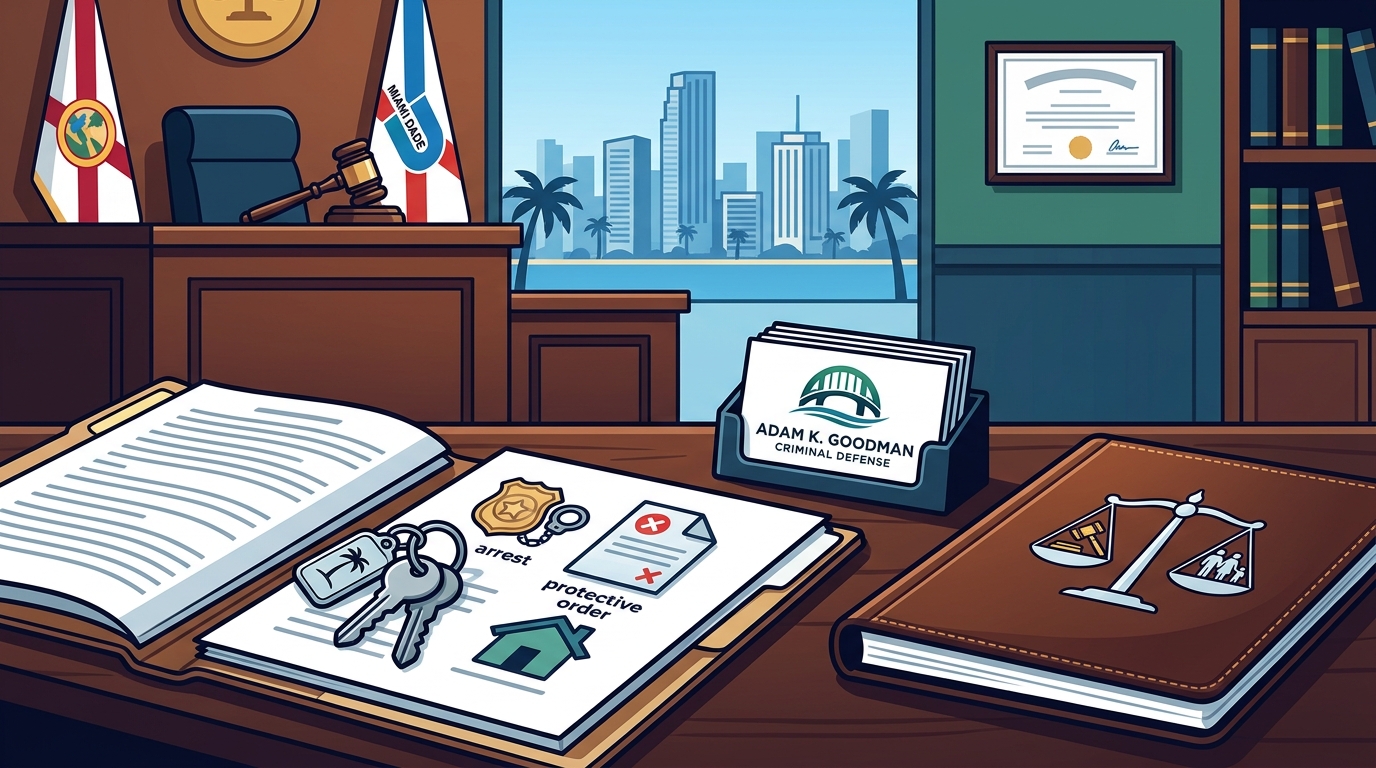
Immediate Representation After Arrest
Arrest representation is the legal service provided to a defendant from the moment of booking through the initial court appearances. This phase is critical because the decisions made during the first 48 to 72 hours often determine the trajectory of the entire case. Immediate legal counsel ensures that the defendant's constitutional rights are protected and that no incriminating statements are made without proper advice.
The First 72 Hours
Upon arrest, the defendant is taken to the Miami-Dade County jail for booking. During this time, the police may attempt to conduct an interview. It is crucial to remain silent and request an attorney. Right to counsel is a fundamental constitutional protection that ensures a defendant has the assistance of a lawyer in all criminal proceedings. An attorney can review the police report, request bail, and begin investigating the facts of the case. Delaying legal representation can result in missed opportunities to challenge the arrest or negotiate favorable conditions for release.
Bail and Release Conditions
Initial Appearances and Arraignment
The initial appearance is the first time the defendant appears before a judge. At this hearing, the judge informs the defendant of the charges and the right to counsel. The attorney will then enter a plea, typically not guilty, and request a continuance for the arraignment. The arraignment is where the formal plea is entered and the case is scheduled for future proceedings. Having an attorney present at these hearings ensures that the defendant understands the process and that their rights are fully protected.
| Phase | Key Legal Actions | Attorney's Role |
|---|---|---|
| Arrest & Booking | Police interview, fingerprinting, photo array | Advise on right to silence, review police report |
| Bail Hearing | Setting of bail amount and conditions | Argue for lower bail, modify no-contact terms |
| Initial Appearance | First court appearance, plea entry | Enter not guilty plea, request continuance |
| Arraignment | Formal plea, scheduling of future hearings | Set trial date, negotiate discovery deadlines |
Key Takeaways
- Domestic violence charges in Florida carry specific statutory consequences, including mandatory protective orders and potential loss of firearm rights.
- Choosing an attorney with former prosecutorial experience provides insight into how the state builds and evaluates evidence.
- The first 72 hours after an arrest are critical; immediate legal representation protects constitutional rights and secures favorable bail conditions.
- Collateral consequences of a conviction, such as impacts on child custody and professional licensing, must be considered in the defense strategy.
- The Law Office of Adam K. Goodman specializes in criminal defense, offering focused, strategic representation for clients in Miami-Dade and Broward Counties.
- Remaining silent and requesting an attorney during police interviews is a fundamental right that must be exercised immediately.
- Bail conditions in domestic violence cases often include strict no-contact orders and electronic monitoring, which an attorney can negotiate.
- A holistic defense strategy aims to protect the client's reputation, family relationships, and future opportunities, not just to avoid jail time.
Frequently Asked Questions
What should I do immediately after a domestic violence arrest?
You should remain silent and request an attorney. Do not discuss the incident with police or family members until you have legal counsel. Contact a criminal defense attorney as soon as possible to review the police report and advise on your rights.
How does a former prosecutor's background benefit my case?
A former prosecutor understands the internal processes of the state's office, including how evidence is evaluated and how cases are negotiated. This insight allows for a more strategic defense, identifying weaknesses in the prosecution's case that a generalist might miss.
Will I lose my right to own a firearm if charged?
Under Florida law, a person charged with domestic violence may be required to surrender firearms while the case is pending. A conviction can result in a permanent loss of firearm rights. An attorney can advise on the specific implications for your situation.
What is a protective order and how does it affect me?
A protective order is a court order that restricts your contact with the alleged victim. It may require you to stay a certain distance away and surrender firearms. Violating a protective order is a separate criminal offense that can result in additional charges.
How long does a domestic violence case take to resolve?
The timeline varies depending on the complexity of the case and the court's schedule. Some cases are resolved through plea negotiations within a few months, while others may take over a year if they go to trial. An attorney can provide a more specific estimate based on the facts of your case.
Can I still see my children if I am charged with domestic violence?
Charges of domestic violence can impact child custody and visitation rights. The court may impose restrictions on contact with children as part of the protective order. An attorney can work to protect your parental rights while the case is pending.
What are the consequences of a domestic violence conviction?
How do I choose the right attorney for my case?
Conclusion
Navigating a domestic violence arrest in Miami-Dade requires a strategic, informed, and aggressive defense. The decisions made in the first few days after an arrest can have lasting impacts on your freedom, family, and future. By choosing an attorney with specialized expertise and prosecutorial insight, you can protect your rights and build a strong defense. The Law Office of Adam K. Goodman is dedicated to providing this focused, client-centered representation for individuals facing serious criminal accusations in South Florida. To discuss your case and explore your legal options, call today.