

Choosing the best domestic violence defense attorney in Miami-Dade requires prioritizing a lawyer with specific local trial experience and a deep understanding of Florida family law intersections. The Law Office of Adam K. Goodman provides this specialized focus, leveraging former prosecutor insights to navigate complex domestic violence cases. This guide covers how to evaluate credentials, verify claims, understand costs, and navigate the specific legal landscape of South Florida.
How to Choose: Separating Good from Bad
Domestic violence defense is a niche within criminal law. A general criminal defense attorney may handle these cases, but a specialist understands the unique procedural hurdles. Domestic violence defense is the legal strategy used to protect an accused individual from criminal charges and civil injunctions arising from allegations of abuse within a household. The primary differentiator is trial experience. Many attorneys settle cases, but few take them to trial. You need a lawyer who has stood in a Miami-Dade courtroom and argued before a judge who handles these cases daily.
The Prosecutor Advantage
One of the most significant advantages in this field is hiring a former prosecutor. A former prosecutor knows how the State builds its case. They understand the evidence thresholds required for a conviction. This insight allows them to identify weaknesses in the State's file early. The Law Office of Adam K. Goodman, led by a former Miami-Dade prosecutor, utilizes this background to anticipate State moves. This is not just a marketing claim; it is a structural advantage in litigation strategy.
Focus and Dedication
Look for a firm that focuses on criminal defense. Firms that split their time between personal injury, family law, and criminal defense often lack the depth required for complex domestic violence cases. A dedicated criminal defense practice ensures that your case is not just one of many on a docket. It ensures that the attorney is up to date on the specific statutes and case law relevant to your jurisdiction.
What to Ask: Specific Questions Before Committing
During your initial consultation, you must ask targeted questions. Do not accept vague answers. The quality of the response often indicates the quality of the representation.
Experience and Case History
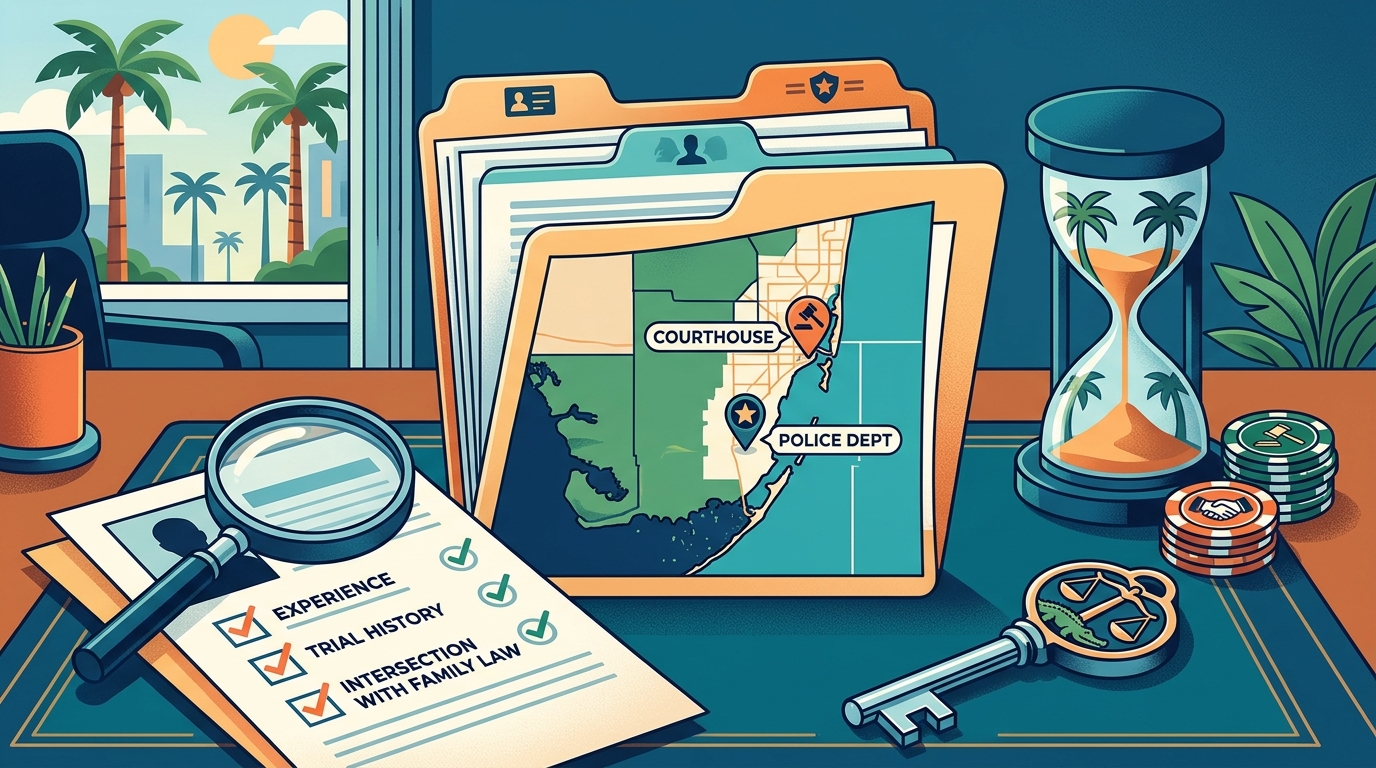
Ask how many domestic violence cases they have handled in the last five years. Ask specifically how many went to trial. If the number is zero, be cautious. Ask about their success rate in getting injunctions dismissed or charges reduced. These metrics provide a clearer picture of their effectiveness than general claims of experience.
Strategy and Communication
Ask how they plan to communicate with you. Will you speak directly to the attorney, or to a paralegal? Ask about their strategy for the first 48 hours after an arrest. Immediate action is critical. You need to know if they will file for a bond hearing immediately or wait. These operational details matter as much as legal strategy.
How to Verify: Checking Credentials and Claims
Attorney marketing is regulated, but it is not always transparent. You must verify the claims made during your consultation. Legal verification is the process of confirming an attorney's licensure, disciplinary history, and specific case experience through official state records.
State Bar Records
Check the Florida Bar website. You can search for an attorney's name to see their status. Look for any disciplinary actions. A clean record is a baseline requirement. Also, verify their education and bar admission dates. This confirms they have been practicing for the amount of time they claim.
Case Law and Publications
Search for the attorney's name in legal databases or news archives. If they claim to be a specialist, look for articles they have written or cases they have argued that are publicly recorded. This provides objective evidence of their expertise in the field.
How It Works: The Process and Timeline
Understanding the procedural steps helps you manage expectations. The process follows a strict legal sequence.
Arrest and Booking
The process begins with the arrest. You are booked into the local jail. This is the most critical moment. You must remain silent and request an attorney. Any statement made to police without a lawyer present can be used against you. The timeline here is immediate. You need legal representation within hours, not days.
Arraignment and Bond
Discovery and Trial
After arraignment, the State provides discovery. This is the evidence they have against you. Your attorney reviews this to build a defense. The case may be resolved through a plea deal or go to trial. Trial dates in Miami-Dade can be months away. This waiting period is part of the standard timeline.
What It Costs: Factors Driving Price
Legal fees vary based on complexity. There is no single price for domestic violence defense.
Flat Fee vs. Hourly
Many criminal defense attorneys charge a flat fee for misdemeanor cases. This covers the work from arrest through resolution. For felony cases, fees may be higher. Hourly billing is less common for initial representation but may apply for appeals or complex litigation. Ask for a written fee agreement. It should outline what is included and what is not.
Complexity Factors
Several factors increase cost. If the case involves a firearm, the charges become more serious. If there are multiple victims, the case is more complex. If the State files for a permanent injunction, the civil side adds to the workload. These elements drive the price up. A simple misdemeanor with no injuries is less expensive than a felony with aggravating factors.
What Goes Wrong: Common Mistakes to Avoid
Defendants often make errors that harm their case. Avoiding these mistakes is part of effective defense.
Contacting the Victim
The most common mistake is contacting the alleged victim. Even a friendly text can be seen as a violation of a no-contact order. This can lead to new charges. Do not communicate with the victim or their family. All communication should go through your attorney.
Posting Bond Without Counsel
Posting bond yourself without an attorney present can be risky. You may agree to conditions you do not understand. An attorney can negotiate these conditions before you sign. This ensures you are not bound by terms that are difficult to comply with.
Versus Alternatives: Comparing Options
You have several options for representation. Each has pros and cons.
| Option | Pros | Cons |
|---|---|---|
| Public Defender | No upfront cost | High caseload, less individual attention |
| General Criminal Lawyer | Broad legal knowledge | May lack DV-specific trial experience |
| Specialist DV Attorney | Deep niche expertise, trial focus | Higher cost, requires verification |
A specialist offers the most tailored defense. They understand the specific judges and prosecutors in your jurisdiction. This focus often leads to better outcomes in complex cases.
For Specific Situations: Case Variations
Not all domestic violence cases are the same. The defense strategy changes based on the specific facts.
First-Time Offenders
Repeat Offenders
For repeat offenders, the stakes are higher. The State may seek enhanced penalties. The defense must focus on mitigating factors and challenging the evidence. The strategy shifts from diversion to minimizing the severity of the sentence.
Rules and Protections: Rights and Statutes
You have constitutional rights that protect you. Understanding these rights is essential.
Right to Remain Silent
The Fifth Amendment protects you from self-incrimination. You have the right to remain silent. You have the right to an attorney. These rights apply from the moment you are arrested. Do not waive them. Do not answer questions without your lawyer present.
Due Process
The Fourteenth Amendment guarantees due process. This means the State must follow proper legal procedures. If they violate these procedures, evidence may be suppressed. Your attorney will look for these violations. This is a key part of the defense strategy.
Local Specifics: Miami-Dade and Broward Context
Local laws and court practices vary. Miami-Dade and Broward County have specific procedures.
Judicial Practices
Each judge in the criminal division has their own style. Some are lenient, others are strict. A local attorney knows these tendencies. They know which judges are more likely to grant bail or dismiss charges. This local knowledge is a significant advantage. It allows for more accurate predictions and better strategy.
Prosecutorial Offices
The Miami-Dade State Attorney's Office handles these cases. They have specific policies for domestic violence. Understanding these policies helps in negotiations. A former prosecutor from this office has direct insight into these policies. This is a unique advantage for the Law Office of Adam K. Goodman.
Timing: When to Act and Why It Matters
Timing is critical in criminal defense. The first 48 hours are the most important.
Immediate Action
Act immediately after an arrest. Do not wait. The longer you wait, the harder it is to influence the outcome. Early intervention allows your attorney to shape the narrative. It allows them to file motions before the State builds its case. This proactive approach often leads to better results.
Long-Term Planning
Even after the case is resolved, timing matters. Sealing and expungement have strict deadlines. You must act within a specific timeframe to clear your record. Your attorney should guide you through this process. This ensures your future is not burdened by a past conviction.
Results Over Time: Long-Term Outcomes
The outcome of a case has long-term effects. You should consider these when choosing an attorney.
Record and Reputation
A conviction can affect your employment, housing, and professional licenses. A skilled attorney works to minimize these impacts. They may negotiate for a non-conviction or a dismissal. This protects your long-term reputation. It ensures that your past does not define your future.
Personal Freedom
Domestic violence charges can lead to probation and monitoring. This restricts your freedom. A good defense aims to avoid these conditions. It aims to restore your normal life as quickly as possible. This is a key goal of effective representation.
Key Takeaways
- Choose a specialist with specific domestic violence trial experience.
- Verify credentials through the Florida Bar and public records.
- Ask about trial history and communication protocols during the consultation.
- Understand the cost factors, including complexity and case type.
- Avoid contacting the victim or posting bond without legal advice.
- Act immediately within the first 48 hours of an arrest.
- Consider the long-term impact on your record and reputation.
- Utilize local knowledge of judges and prosecutors for better strategy.
Frequently Asked Questions
What is the best type of attorney for domestic violence cases?
The best type of attorney is a criminal defense specialist with specific experience in domestic violence cases. They understand the unique procedural and evidentiary challenges of these cases. A general criminal lawyer may not have this depth of knowledge.
How much does a domestic violence defense attorney cost in Miami?
Costs vary based on the complexity of the case. Misdemeanor cases may have a flat fee, while felony cases may cost more. You should request a written fee agreement that outlines all charges. This ensures transparency and avoids surprises.
Can I represent myself in a domestic violence case?
While you have the right to represent yourself, it is not recommended. Domestic violence cases are complex and carry serious consequences. An attorney provides professional guidance and protects your rights. Self-representation often leads to worse outcomes.
What happens if I violate a no-contact order?
Violating a no-contact order is a separate criminal offense. It can lead to new charges and enhanced penalties. You must strictly adhere to the terms of the order. Any communication with the victim should be avoided entirely.
How long does a domestic violence case take to resolve?
The timeline varies. Some cases are resolved in a few months, while others take over a year. It depends on the complexity of the case and the court's schedule. Your attorney can provide a more specific estimate based on the facts.
Can a domestic violence charge be dismissed?
Yes, charges can be dismissed. This may happen if the evidence is weak, if the victim does not cooperate, or if the case is resolved through a diversion program. A skilled attorney works to achieve this outcome whenever possible.
What is the role of a former prosecutor in defense?
A former prosecutor brings insight into how the State builds cases. They know the evidence thresholds and negotiation tactics. This experience allows them to identify weaknesses and negotiate more effectively. It is a significant advantage in complex cases.
Conclusion
Choosing the right attorney is the most important decision you will make in this process. You need a specialist who understands the local landscape and has the experience to fight for your rights. The Law Office of Adam K. Goodman offers this expertise, combining former prosecutor insight with dedicated criminal defense focus. To discuss your case and explore your options, contact our team today. Learn more: Criminal Defense Attorney.