

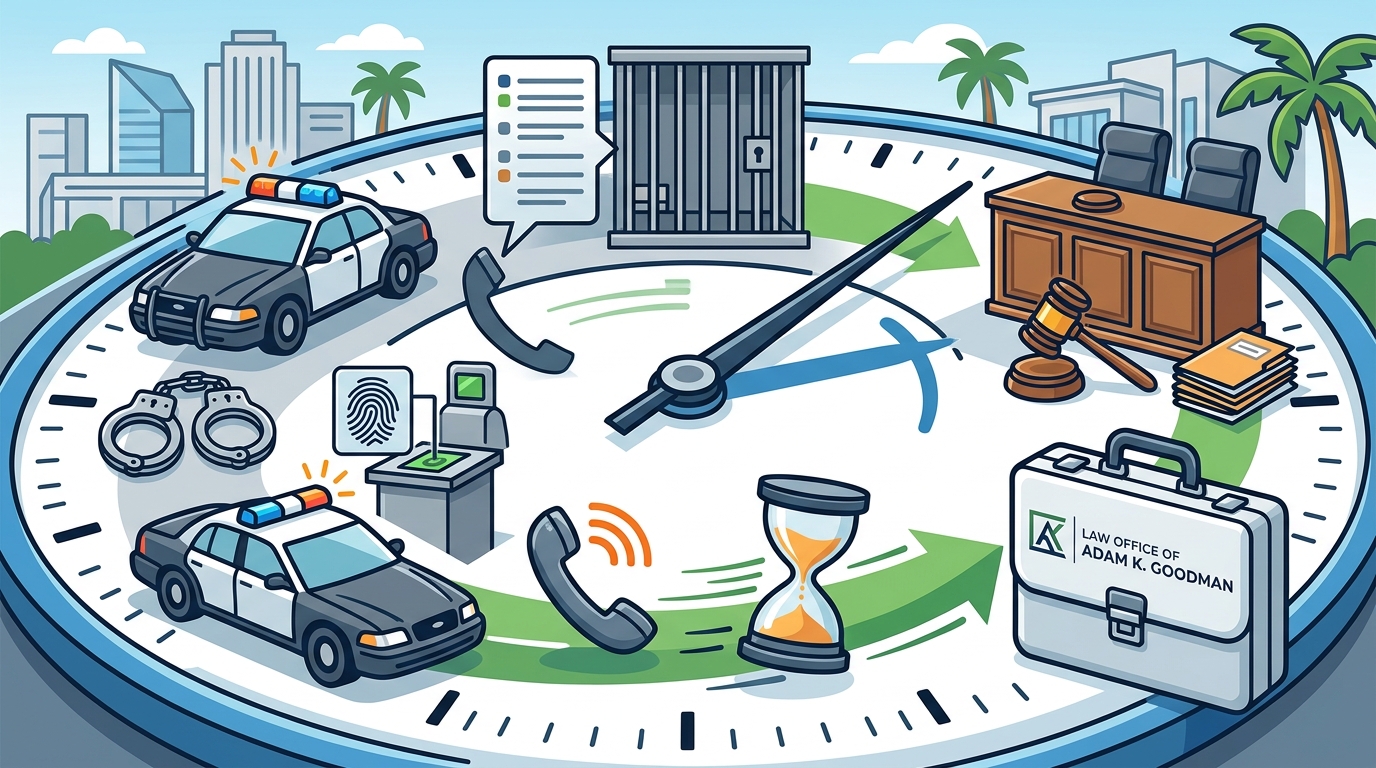
Being arrested is a traumatic and disorienting experience that can instantly upend your life. In Miami-Dade County, the legal system moves with alarming speed, and the decisions you make in the first few hours can determine the trajectory of your entire case. According to recent data on local criminal justice processing, individuals in this jurisdiction often face their first court appearance within 24 hours of custody. This rapid timeline means that waiting for a lawyer to contact you is not an option; you must have aggressive legal representation ready to act immediately.
The Immediate Arrest and Booking Process
The moment law enforcement takes you into custody, the clock starts ticking. In Miami-Dade, arrests are typically handled by the Miami-Dade Police Department (MPD) or other local agencies. Once arrested, you are transported to a booking facility, such as the Miami-Dade Detention Center. Here, your personal information is recorded, fingerprints are taken, and a photograph is captured. This process is administrative but critical for establishing your identity in the system.
During this phase, it is vital to understand that you have the right to remain silent. Anything you say to police officers, even casual conversation, can be used against you later. Do not attempt to explain your side of the story to the arresting officers. Instead, clearly state that you wish to remain silent and that you want to speak to an attorney. This simple action protects your constitutional rights and prevents self-incrimination.
Understanding the difference between an arrest and a citation is also important. While some minor offenses may result in a citation allowing you to go home, serious charges require immediate detention. For those facing serious charges, the goal is to secure release as quickly as possible through a bond hearing. If you are unsure of your rights during this chaotic time, consulting with a Miami criminal defense lawyer can provide immediate clarity and protection.
The First Appearance and Bond Hearings
The First Appearance is your first interaction with a judge, usually occurring within 24 hours of your arrest. This hearing is not a trial. The judge will inform you of the charges against you and determine whether there is probable cause for your detention. The primary focus of this hearing is setting bond, which is the amount of money required to secure your release from jail while you await trial.
In Florida, bond hearings are governed by specific statutes that dictate when a judge must set bond and when they may deny it. For example, bond hearings and Arthur hearings are critical procedural steps that determine your freedom before trial. If the charges are severe, such as capital felonies or certain domestic violence cases, the state may argue against bond, requiring your attorney to present compelling arguments for your release.
The judge will consider several factors when setting bond, including the severity of the offense, your criminal history, and your ties to the community. A higher bond amount may be set if the judge believes you are a flight risk or a danger to the community. If you cannot afford the full bond amount, you may work with a bail bond agent to post a percentage of the total. However, relying on a bail bond agent does not replace the need for legal counsel. You need an attorney who can challenge the bond amount or argue for your release on personal recognizance.
Arraignment and Entering a Plea
After the First Appearance, the next major step is the arraignment. This is a formal court proceeding where you are read the charges against you and asked to enter a plea. The options typically include guilty, not guilty, or no contest. In almost all cases, your attorney will advise you to enter a plea of not guilty. This preserves your right to a trial and allows your legal team time to investigate the case thoroughly.
Entering a not guilty plea does not mean you are claiming innocence; it means you are exercising your right to force the state to prove its case beyond a reasonable doubt. The prosecution bears the burden of proof, and they must present evidence that convinces a jury of your guilt. If you were to plead guilty immediately, you would waive this right and likely face the maximum penalties associated with the charge.
During this stage, your attorney will begin reviewing the police reports, witness statements, and any physical evidence. This early review is crucial for identifying weaknesses in the state's case. For instance, if the arrest involved an assault and battery charge, your lawyer might look for inconsistencies in the victim's account or issues with the arrest warrant. Understanding the specific definitions of these charges is vital, as assault is defined as placing another in fear of harm, while battery involves actual physical contact.
Discovery and Evidence Review
Discovery is the process by which both the prosecution and the defense exchange information relevant to the case. The state is required to provide your attorney with all evidence they intend to use, including police reports, body camera footage, forensic analysis, and witness lists. This phase can take weeks or months, depending on the complexity of the case and the volume of evidence.
Your attorney will meticulously review this material to find flaws in the prosecution's narrative. Common issues include illegal searches and seizures, mishandled evidence, or unreliable witness testimony. If your attorney finds that evidence was obtained in violation of your constitutional rights, they may file a motion to suppress that evidence. Suppressing key evidence can significantly weaken the state's case, sometimes leading to a dismissal of charges.
It is also during this phase that your attorney may investigate alternative explanations for the events in question. For example, in cases involving domestic violence, your lawyer might uncover evidence of mutual combat or self-defense that was not initially considered. Building a strong defense requires a deep understanding of the facts and the law, which is why having a former prosecutor on your side can be advantageous.
Pre-Trial Motions and Negotiations
While discovery is ongoing, your attorney will engage in negotiations with the prosecutor. This is often where the bulk of criminal cases are resolved. Prosecutors may offer a plea deal, which could involve reduced charges, recommended sentencing, or dismissal of certain counts in exchange for a guilty plea. Your attorney will evaluate whether a plea deal is in your best interest based on the strength of the evidence and the potential risks of going to trial.
Pre-trial motions are also filed during this stage. These can include motions to dismiss the case, motions to suppress evidence, or motions for a change of venue. Each motion serves a specific purpose in protecting your rights and strengthening your defense. For example, a motion to dismiss might be filed if the statute of limitations has expired or if the arrest lacked probable cause.
Negotiations require skill and experience. A prosecutor is more likely to offer a favorable deal if they know your attorney is prepared to take the case to trial and win. This is where the reputation and track record of your legal team matter. Adam K. Goodman is a former Miami prosecutor who understands how the state builds its cases. This insider knowledge allows him to anticipate the prosecution's strategy and counter it effectively.
Trial and Final Disposition
If a plea agreement cannot be reached, the case proceeds to trial. In Miami-Dade County, trials can be before a judge (bench trial) or a jury (jury trial). The trial process involves jury selection, opening statements, presentation of evidence, cross-examination of witnesses, closing arguments, and jury deliberation. The standard of proof is "beyond a reasonable doubt," which is the highest standard in the legal system.
During the trial, your attorney will present your defense, challenge the state's evidence, and argue for your acquittal. This is the most critical phase of the legal process, as it determines your freedom. A wrongful conviction can have lifelong consequences, including loss of employment, housing, and civil rights. Therefore, having a skilled trial lawyer is essential.
If you are found guilty, the next step is sentencing. The judge will consider factors such as the nature of the crime, your criminal history, and any mitigating circumstances. Sentencing can range from probation and community service to lengthy prison sentences. In some cases, you may have the right to appeal the conviction or sentence. Appeals attorneys in Miami can review trial records for legal errors that may have affected the outcome. Understanding the appellate process is crucial if you believe your rights were violated during the trial.
Key Takeaways
- Immediate Action is Critical: You must contact a criminal defense attorney immediately after arrest to protect your rights and navigate the 24-hour bond hearing window.
- Right to Remain Silent: Do not speak to police without your attorney present. Anything you say can be used against you in court.
- Bond Hearings Determine Freedom: The First Appearance within 24 hours is where bond is set, determining how long you stay in jail before trial.
- Not Guilty Plea Preserves Options: Always plead not guilty at arraignment to allow your attorney time to investigate and negotiate.
- Discovery Reveals Case Weaknesses: Reviewing police reports and evidence is essential for finding grounds to suppress evidence or dismiss charges.
- Former Prosecutor Advantage: Having a lawyer who was formerly a prosecutor provides strategic insight into how the state builds its cases.
- Appeals Are a Last Resort: If convicted, you may have grounds for appeal based on legal errors, requiring specialized appellate expertise.
Frequently Asked Questions
How long do I have to post bond after arrest?
In Miami-Dade County, you are typically entitled to a bond hearing within 24 hours of your arrest. If the state does not set bond or if you are held on a hold, your attorney can file a writ of habeas corpus to challenge the detention. Prompt action is essential to minimize time in jail.
Can I speak to my family while in jail?
Yes, you generally have the right to make phone calls after booking. However, these calls are often monitored and recorded. It is best to limit these calls to contacting your attorney or a trusted family member who can help secure legal representation. Avoid discussing case details on these lines.
What is the difference between an arrest and a citation?
An arrest involves taking you into custody and booking you into jail. A citation, or notice to appear, allows you to be released with a promise to appear in court at a later date. Citations are typically issued for minor offenses, while arrests are reserved for more serious crimes.
How does a former prosecutor help my defense?
A former prosecutor understands the internal workings of the state's attorney office. They know how cases are built, what evidence is valued, and how prosecutors negotiate. This insight allows them to identify weaknesses in the state's case and negotiate more effectively for their clients.
What happens if I cannot afford a lawyer?
If you cannot afford a private attorney, you may be eligible for a public defender. However, public defenders are often overworked and may not have the time to devote to your case. Hiring a private criminal defense attorney ensures you have dedicated representation focused solely on your outcome.
Can charges be dropped before trial?
Yes, charges can be dropped at various stages, including during discovery if the evidence is insufficient, or through negotiation with the prosecutor. Your attorney can file motions to suppress evidence or dismiss charges, which may lead to the state dropping the case entirely.
What is the statute of limitations for criminal charges in Florida?
The statute of limitations varies by crime. For example, there is no statute of limitations for capital felonies like murder. For other offenses, it can range from a few years to several decades. It is important to consult with an attorney to determine the specific deadlines applicable to your case.
Contact a Miami Criminal Defense Attorney
If you or a loved one has been arrested in Miami-Dade County, time is of the essence. The legal system is complex and unforgiving, but you do not have to face it alone. The Law Office of Adam K. Goodman provides aggressive and dedicated criminal defense representation. As a former Miami prosecutor, Adam K. Goodman knows how the state builds its cases and how to dismantle them. Contact us today for a free consultation and let us fight for your freedom.