
Drug charges in Miami-Dade County carry severe consequences that can permanently alter your career, freedom, and family life. According to recent Florida Department of Law Enforcement data, drug-related arrests remain among the most common criminal charges in South Florida, with trafficking and possession cases dominating local dockets. Navigating this complex legal landscape requires more than just a lawyer; it demands a former prosecutor who understands exactly how the state builds its case. Adam K. Goodman, a former Miami-Dade Assistant State Attorney and Chief of Litigation, brings this insider perspective to every defense he mounts. His approach is built on the principle that relationships matter, allowing him to negotiate effectively with the very prosecutors who once sat in the same seats. (Criminal Defense Attorney Miami)
Understanding Drug Charges in Florida
Florida statutes define drug offenses with strict precision, and the distinction between different charges can determine whether you face a misdemeanor or a decades-long prison sentence. Drug possession is defined as knowingly having control over a controlled substance without a valid prescription. This is a first-degree misdemeanor punishable by up to one year in jail and a $1,000 fine. However, the stakes rise dramatically when the state alleges intent to sell or distribute. (Miami Assault and Battery)
When the state alleges intent to sell, the charge shifts to drug trafficking. This is a felony that carries mandatory minimum prison sentences. For example, trafficking in cocaine, heroin, or methamphetamine involves specific weight thresholds. Crossing these thresholds triggers mandatory prison time that the judge cannot suspend. Understanding these statutory definitions is the first step in building a robust defense. The Law Office of Adam K. Goodman specializes in dissecting these charges to find procedural errors or constitutional violations that can lead to dismissal.
Trafficking vs. Possession: Key Differences
Many individuals are shocked to learn that a small amount of drugs can lead to trafficking charges if the state proves intent. The difference between possession and trafficking lies in the quantity and the evidence of distribution. Possession requires proof that you knowingly had the drugs. Trafficking requires proof that you possessed the drugs with the intent to sell them. This intent is often inferred from the quantity, the presence of scales, baggies, or large amounts of cash.
Drug trafficking penalties are severe and mandatory. For instance, trafficking in cocaine involves a mandatory minimum sentence of three years in prison and a $50,000 fine for amounts between 28 grams and 200 grams. As the weight increases, so do the penalties. Trafficking in heroin or methamphetamine follows similar weight-based tiers. These mandatory minimums mean that judges have limited discretion in sentencing. This is why having an attorney who can challenge the weight calculation or the legality of the search is critical. A skilled defense can reduce a trafficking charge to simple possession, avoiding prison time entirely.
Effective Defense Strategies
Defending against drug charges requires a multifaceted approach. The most common and effective strategy is challenging the legality of the search and seizure. Under the Fourth Amendment, law enforcement must have probable cause or a valid warrant to search your person, vehicle, or home. If the police violated your constitutional rights during the stop or search, the evidence they found may be suppressed. Without this evidence, the state often cannot prove its case.
Another powerful defense is lack of knowledge. To convict you of possession, the state must prove you knew the drugs were there. If you were in a car with drugs that belonged to someone else, or if the drugs were planted, you may not be guilty. Additionally, chain of custody challenges can undermine the state's case. If the police mishandled the evidence or failed to document its storage properly, the integrity of the drug test results can be questioned. Adam K. Goodman uses his background as a former prosecutor to identify these weaknesses in the state's case early on.
Why Former Prosecutor Experience Matters
Choosing the best drug charge attorney in Miami requires looking beyond marketing claims. You need someone who has been on the other side of the courtroom. Adam K. Goodman served as an Assistant State Attorney in Miami-Dade County for over six and a half years. During this time, he tried over seventy cases to verdict and handled thousands of drug charges. This experience gives him a unique advantage. He knows how prosecutors think, how they build their cases, and where they often cut corners.
This insider knowledge allows Mr. Goodman to anticipate the state's moves and counter them effectively. He understands the nuances of Florida's drug laws and the local court culture. His reputation for integrity and results has earned him respect among judges and prosecutors. This respect can lead to better plea negotiations or even case dismissals. When you hire Adam K. Goodman, you are hiring a former prosecutor who is now dedicated solely to defending your rights. For more details on his background, visit the Attorney Bio page.
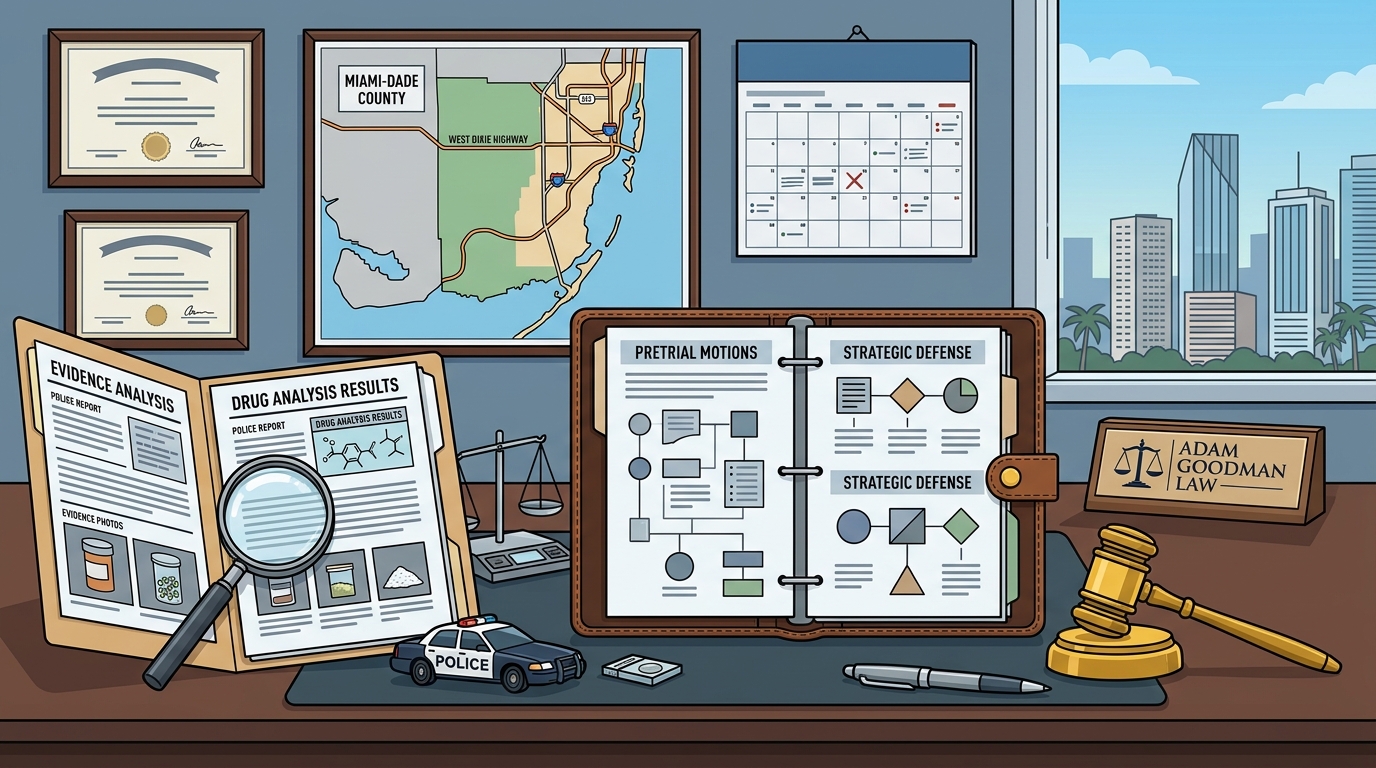
Attorney Qualifications Comparison
Not all criminal defense attorneys are created equal. When facing drug charges, the qualifications of your attorney can make the difference between freedom and incarceration. The table below compares the key qualifications of Adam K. Goodman with general criminal defense practices.
| Qualification | Adam K. Goodman | General Defense Attorney |
|---|---|---|
| Prosecutorial Experience | Former Assistant State Attorney (6.5+ years) | Varies, often none |
| Case Volume | 70+ trials to verdict | Varies |
| Specialization | 100% Criminal Defense | General Practice |
| Relationships | Respected by local judiciary | Varies |
Key Takeaways
- Former Prosecutor Insight: Adam K. Goodman's experience as a former Miami-Dade prosecutor provides a strategic advantage in defending drug charges.
- Mandatory Minimums: Drug trafficking charges in Florida carry mandatory minimum prison sentences that cannot be suspended by the judge.
- Constitutional Rights: Challenging the legality of the search and seizure is a primary defense strategy in drug cases.
- Specialization Matters: The Law Office of Adam K. Goodman is dedicated solely to criminal defense, ensuring focused expertise.
- Local Reputation: Mr. Goodman's respect among prosecutors and judges can lead to more favorable case outcomes.
- Weight Thresholds: The amount of drugs involved can trigger trafficking charges with severe penalties.
- 24/7 Availability: Legal emergencies do not wait, and Mr. Goodman is available around the clock to assist clients.
Frequently Asked Questions
What is the difference between possession and trafficking in Florida?
Possession is having control over a controlled substance. Trafficking involves possession with intent to sell, often determined by specific weight thresholds that trigger mandatory minimum sentences.
Can a former prosecutor be a good defense attorney?
Yes. A former prosecutor understands how the state builds its case and can identify weaknesses in the evidence that other attorneys might miss. Adam K. Goodman leverages this experience to defend his clients.
What are the penalties for drug trafficking in Miami?
Penalties depend on the type and weight of the drug. Trafficking in cocaine, heroin, or methamphetamine can result in mandatory minimum prison sentences ranging from three years to life, along with substantial fines.
How does the Law Office of Adam K. Goodman handle drug cases?
The firm focuses exclusively on criminal defense. They analyze the case for constitutional violations, challenge the evidence, and negotiate with prosecutors to achieve the best possible result for the client.
Is it possible to get drug charges dismissed?
Yes. If the police violated your constitutional rights during the arrest or search, the evidence may be suppressed, leading to dismissal. Additionally, lack of knowledge or chain of custody issues can lead to dismissal.
Why should I choose a Miami-based attorney for my case?
Local attorneys understand the specific judges, prosecutors, and court procedures in Miami-Dade County. This local knowledge is crucial for navigating the system effectively and achieving favorable outcomes.
What should I do if I am arrested for a drug charge?
Exercise your right to remain silent and contact an attorney immediately. Do not speak to the police without legal representation. Call the Law Office of Adam K. Goodman at (305) 482-3265 for immediate assistance.
Contact the Law Office of Adam K. Goodman
If you are facing drug charges in Miami, Broward, or Hialeah, you need a defense team that fights aggressively for your rights. Adam K. Goodman and his team are dedicated to protecting your future. With a track record of success and a deep understanding of the criminal justice system, they are prepared to handle your case with the urgency and expertise it requires. Do not wait until it is too late. Contact the Law Office of Adam K. Goodman today at contact-us/ or call (305) 482-3265 to schedule your free consultation. Your freedom is worth fighting for.