

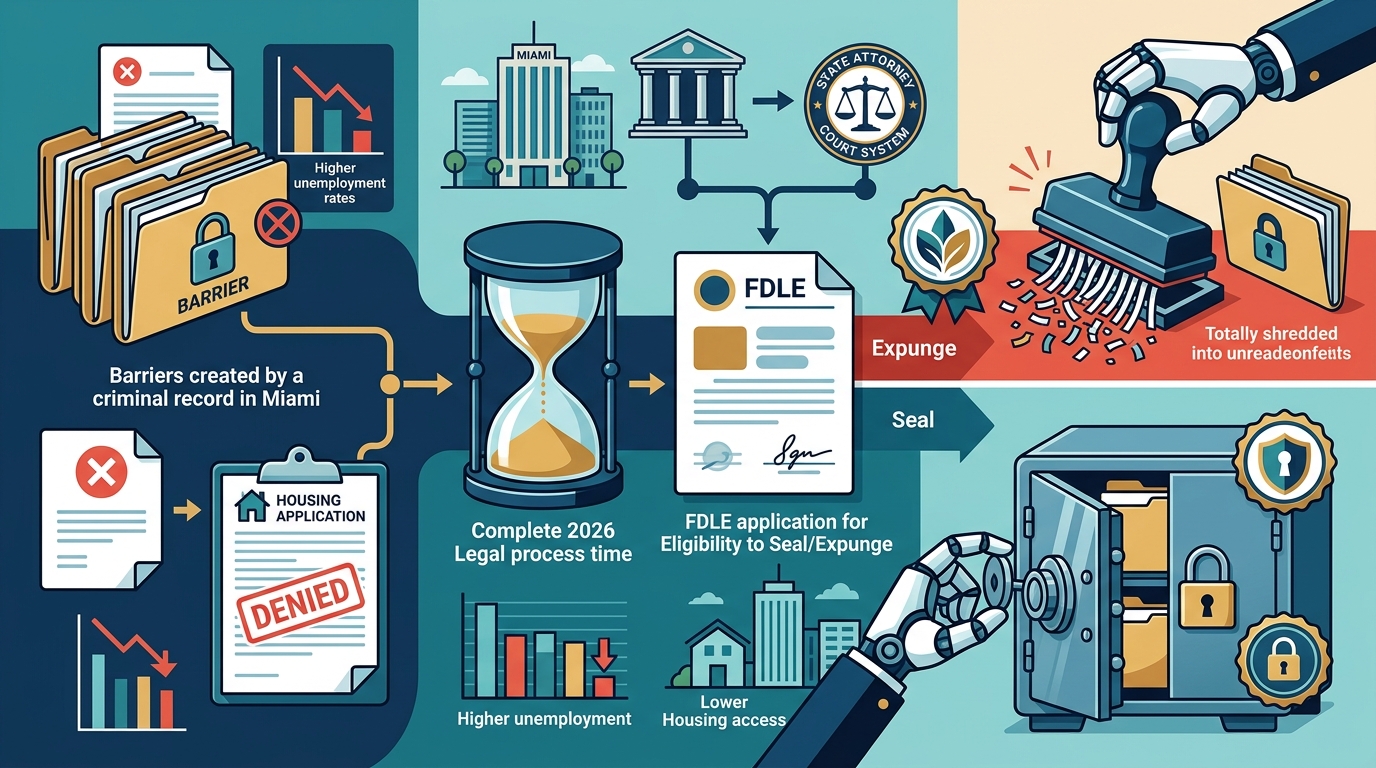
Having a criminal record in Miami can create significant barriers to employment, housing, and professional licensing. According to recent data from the Bureau of Labor Statistics, individuals with criminal records face unemployment rates nearly double that of those without records. This disparity highlights the critical importance of understanding your legal options for record relief. In Florida, the two primary mechanisms for hiding your past from the general public are expungement and sealing. While these terms are often used interchangeably, they have distinct legal definitions and eligibility requirements. Navigating this complex landscape requires precise knowledge of Florida Statutes and local court procedures. This guide provides a detailed roadmap for Miami residents seeking to clear their names and move forward with confidence. (Criminal Defense Attorney Miami)
What Is the Difference Between Expungement and Sealing?
Understanding the distinction between these two legal remedies is the first step in your journey. Expungement is the process where the state physically destroys or erases the records of your arrest or case. When a record is expunged, it is as if the arrest never happened for most public purposes. Sealing, on the other hand, keeps the records intact but hides them from the general public, employers, and landlords. Sealed records are still accessible to law enforcement and certain licensing agencies. (Miami Assault and Battery)
The choice between these options often depends on the outcome of your case. For instance, if you received a dismissal or a withdrawal of charges, you may be eligible for either. However, if you received a conviction, your options are significantly more limited. In many cases, a conviction prevents you from sealing or expunging your record entirely, unless you have received a specific executive pardon. This is why consulting with a former prosecutor is invaluable, as they understand the nuances of how charges are handled in Miami-Dade courts.
Eligibility Requirements for Record Relief
Florida law is strict regarding who can qualify for record relief. You must meet several criteria before you can even apply. First, you must not have ever previously sealed or expunged a criminal record in Florida or any other jurisdiction. This is a one-time opportunity under state law. Second, you must not have been convicted of any offense that is ineligible for relief. Third, you must not have been adjudicated guilty of any criminal offense, except for minor traffic violations that did not involve alcohol or drugs.
Additionally, you must have never been arrested for any other crime. If you have a history of multiple arrests, even if they were dismissed, you may be disqualified. The Florida Department of Law Enforcement (FDLE) conducts a thorough background check during the application process. Any discrepancy or hidden arrest can lead to a denial. It is crucial to be completely transparent about your entire criminal history when seeking relief. A former prosecutor knows exactly how FDLE reviews these files and can help you anticipate potential hurdles before you submit your application.
Disqualifying Offenses and Exceptions
Not all crimes are eligible for sealing or expungement. Florida Statute 943.058 lists numerous offenses that automatically disqualify an applicant. These include serious violent felonies, sexual offenses, and crimes involving elder abuse or disability. If your arrest involved any of these disqualifying charges, you generally cannot seal or expunge your record. However, there are some exceptions and nuances that require expert legal analysis.
Domestic Violence Considerations
Domestic violence cases in Miami are handled with particular scrutiny. If you were arrested for domestic battery or related offenses, you may find it difficult to qualify for record relief. The state has a strong interest in keeping these records accessible for background checks involving protective orders or child custody disputes. However, if the charges were dropped or you were found not guilty, you might still have a path forward. It is essential to review the specific details of your case with an attorney who understands the local judicial perspective on domestic violence.
Drug Offense Nuances
Drug charges present another layer of complexity. While simple possession of marijuana was decriminalized in Florida, other drug offenses remain serious felonies or misdemeanors. If your arrest involved trafficking, distribution, or possession of controlled substances other than small amounts of marijuana, you are likely ineligible for sealing or expungement. The state maintains a zero-tolerance policy for drug-related crimes in the context of record relief. This is why having a legal strategy that focuses on the specific nature of the charge is critical.
The Application Process in Miami-Dade
Once you determine that you are eligible, the next step is the application process. This involves obtaining a Certificate of Eligibility from the Florida Department of Law Enforcement (FDLE). You must submit your application to FDLE along with a non-refundable fee. FDLE will then conduct a background check to verify your eligibility. If approved, they will issue the certificate, which you must then present to the court that handled your case.
After receiving the certificate, you must file a petition with the court. This petition must include detailed information about your arrest, the disposition of the case, and your current status. The court will review your petition and may schedule a hearing. If the judge approves your petition, they will issue an order directing the relevant agencies to seal or expunge your records. This process can take several months, and any error in the paperwork can result in delays or denials. Working with an experienced attorney ensures that your petition is filed correctly and promptly.
Costs and Legal Fees
The cost of sealing or expunging a record involves several components. First, there is the FDLE application fee, which is currently $75. Second, there are court filing fees, which can vary by county but are typically around $165. Third, you may need to pay for fingerprinting and background checks. Finally, there are legal fees for attorney representation. Given the complexity of the process and the high stakes involved, professional legal assistance is highly recommended. The Law Office of Adam K. Goodman offers competitive legal fees and a free consultation to help you understand your options.
Key Takeaways
- One-Time Opportunity: Florida law allows you to seal or expunge your record only once in your lifetime.
- No Convictions: You generally cannot seal or expunge a record if you have been adjudicated guilty of any crime.
- FDLE Approval: You must first obtain a Certificate of Eligibility from the Florida Department of Law Enforcement.
- Disqualifying Offenses: Serious violent felonies, sexual offenses, and certain drug crimes are ineligible for relief.
- Domestic Violence: Cases involving domestic battery face stricter scrutiny and may be harder to clear.
- Legal Expertise: A former prosecutor can identify potential issues in your background that you might miss.
- Timeliness: There are strict time limits for applying for record relief after your case is closed.
Frequently Asked Questions
Can I seal my record if I have a prior conviction?
In most cases, no. Florida law prohibits sealing or expunging records if you have been adjudicated guilty of any criminal offense. However, there are rare exceptions, such as receiving a full and unconditional pardon from the Governor.
How long does the process take?
The process can take several months. It typically involves obtaining the Certificate of Eligibility from FDLE, which can take 60 to 90 days, followed by court filing and judicial review. Total time varies based on court backlogs and FDLE processing times.
Will my record be completely gone?
If you receive an expungement, the records are physically destroyed or erased. If you receive a sealing, the records are hidden from the public but remain accessible to law enforcement and certain government agencies.
Do I need a lawyer to apply?
While you can apply pro se, it is highly recommended to have an attorney. The process involves complex legal paperwork and strict deadlines. A mistake can result in a denial that you cannot appeal. An attorney ensures your application is accurate and complete.
What is the cost of sealing or expunging?
The costs include the FDLE application fee ($75), court filing fees (approx. $165), fingerprinting fees, and legal fees. The total cost varies depending on your specific case and the attorney you hire.
Can I apply if I was arrested in a different county?
Yes, you can apply regardless of where the arrest occurred, as long as you meet the state eligibility requirements. However, you must file your petition in the court that handled your case.
What if my charges were dropped?
If your charges were dropped or dismissed, you may be eligible for sealing or expungement. You must also meet the other eligibility criteria, such as having no prior convictions or previous sealings.
Contact the Law Office of Adam K. Goodman
Do not let your past define your future. If you are eligible for sealing or expungement, taking action now can open doors to new opportunities. The Law Office of Adam K. Goodman, led by a former Miami prosecutor, provides aggressive and knowledgeable defense for clients seeking record relief. We understand the intricacies of Florida law and the local court system. Contact us today for a free consultation to discuss your case and explore your options. Call (305) 482-3265 or visit our contact page to schedule an appointment.