

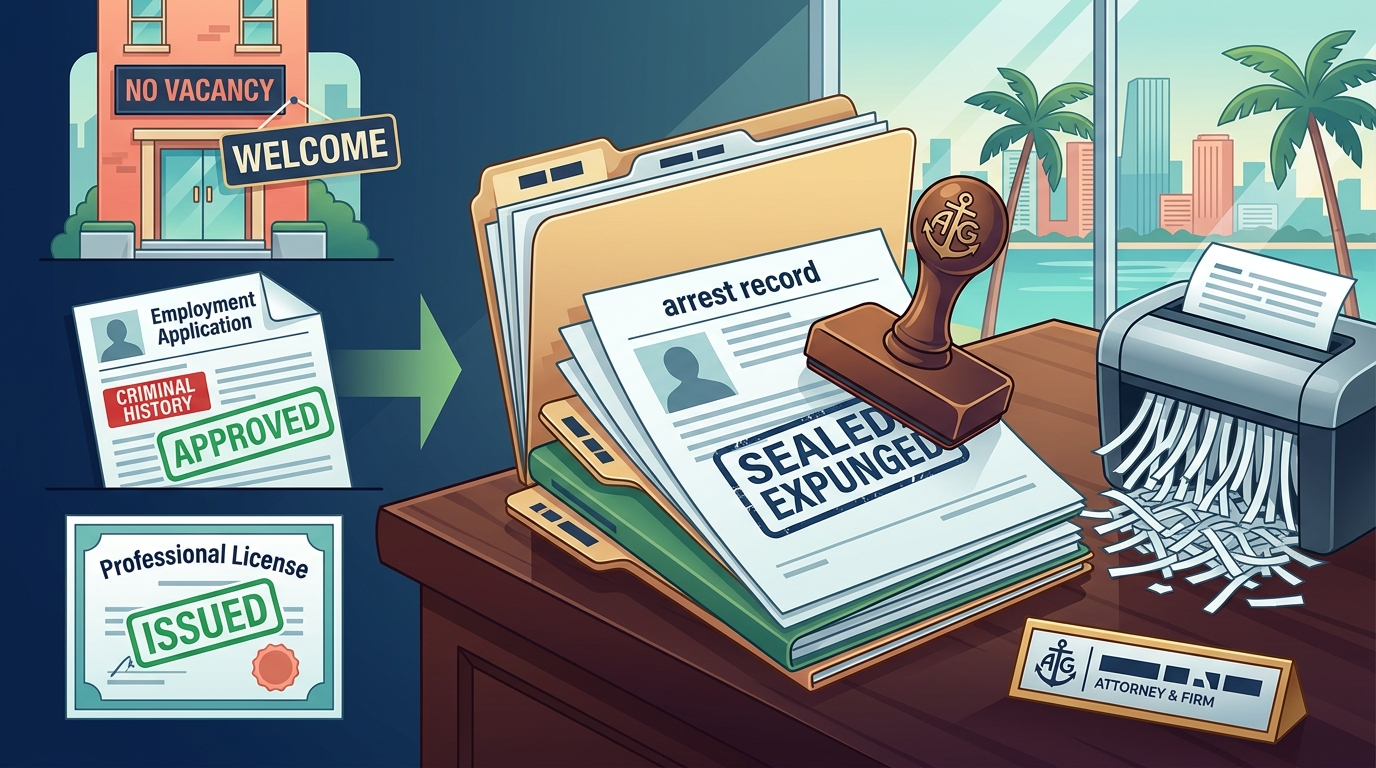
Having a criminal record in Florida creates significant barriers to employment, housing, and professional licensing. According to recent labor market analyses, individuals with criminal histories face a hiring penalty that can reduce callback rates by up to 50% compared to non-offenders. This statistic underscores the urgent need for legal intervention to seal or expunge records. The Law Offices of Adam K. Goodman specializes in navigating these complex statutory requirements to help clients reclaim their futures.
Understanding Sealing vs. Expungement
Many clients in Miami and Broward County confuse the terms "sealing" and "expungement." While both processes restrict public access to your criminal history, they operate under different legal frameworks. Sealing is the most common remedy for cases that were dismissed, resulted in a withhold of adjudication, or were diverted from trial. When a record is sealed, it is hidden from the general public and most private employers, though government agencies and law enforcement may still access it.
Expungement, often referred to as a "clean slate," is a more aggressive legal remedy. It allows for the physical destruction of certain arrest records and criminal history files. Expungement is typically available for first-time offenders who have never had a prior sealing or expungement in Florida. The distinction is critical because the eligibility requirements for each are mutually exclusive in many scenarios. A former prosecutor like Adam K. Goodman understands the precise statutory language required to argue for the most favorable outcome for your specific case.
Eligibility Criteria and Disqualifiers
Florida law is strict regarding who qualifies for record relief. The state maintains a list of disqualifying offenses that generally prevent any form of record sealing or expungement. These typically include violent crimes, sexual offenses, and crimes involving minors. If your record contains any of these disqualifiers, you may be permanently barred from relief under current statutes.
For those who do not have disqualifying offenses, the primary requirement is that you have not previously received a sealing or expungement in any jurisdiction. Additionally, you must not have been adjudicated guilty of the offense. This means that a conviction usually disqualifies you from sealing, unless you have completed a specific diversion program or received a withhold of adjudication. The process requires a thorough review of your entire criminal history, not just the most recent charge.
Disqualifying Offenses
Florida Statute 943.058 outlines specific crimes that are ineligible for sealing. These include:
- Domestic violence offenses
- Sexual battery or lewd/lascivious conduct
- Crimes against children or elderly persons
- Human trafficking
- Armed robbery or burglary with assault or battery
If your case involves any of these charges, you must consult with a specialized criminal defense attorney in Miami to explore alternative post-conviction relief options, as standard sealing may not be an option.
The Application Process in Miami-Dade
The journey to clear your record begins with obtaining a Certificate of Eligibility from the Florida Department of Law Enforcement (FDLE). This is a mandatory first step before you can file any petitions with the court. The FDLE conducts a comprehensive background check to ensure you meet all statutory requirements. If your application is denied by the FDLE, you cannot proceed to the court system.
Once you receive the Certificate of Eligibility, you must file a petition with the circuit court in the county where the arrest or prosecution occurred. In Miami-Dade County, this involves filing with the Clerk of the Circuit Court. The petition must include detailed information about your criminal history, the disposition of the case, and your current employment status. You will also need to pay a filing fee, which can be substantial.
After filing, the State Attorney's Office will review your petition. They have the right to object to the sealing or expungement if they believe you are ineligible. If there are no objections, the judge will review the petition and, if satisfied, will issue an order granting the relief. This order is then sent to the FDLE and various criminal justice agencies to update their records.
Steps to Secure Your Certificate
- Gather all court disposition documents for every case you wish to seal.
- Complete the FDLE application form accurately.
- Submit fingerprints and the required fee to the FDLE.
- Wait for the Certificate of Eligibility (this can take several months).
- File the petition in the appropriate circuit court.
Costs and Attorney Fees
The financial cost of clearing your record extends beyond attorney fees. You must account for FDLE processing fees, court filing fees, and potential costs for obtaining certified court documents. Understanding these costs upfront is essential for budgeting your legal defense strategy.
| Cost Category | Estimated Amount | Notes |
|---|---|---|
| FDLE Application Fee | $75.00 | Non-refundable processing fee for background check. |
| Court Filing Fee | $400.00 - $500.00 | Varies by county; may be waived for indigent defendants. |
| Attorney Fees | Varies | Depends on case complexity and prior history. |
| Court Document Retrieval | $20.00 - $100.00 | Cost to obtain certified dispositions from clerk. |
While the upfront costs can seem high, the long-term financial benefit of removing barriers to employment and housing often outweighs the initial investment. Many clients find that securing a job with a clean record pays for the legal fees within months. For more details on criminal defense costs and attorney fees in Miami, please review our detailed pricing guides.
Common Legal Mistakes to Avoid
Attempting to navigate the sealing and expungement process without legal counsel is risky. One common mistake is applying for sealing when you are actually eligible for expungement, or vice versa. Choosing the wrong path can result in a denial that permanently bars you from future applications. Another frequent error is failing to disclose all prior arrests, even those that were dismissed. The FDLE will find these records, and omission can lead to immediate denial and potential fraud charges.
Additionally, many individuals wait too long to apply. While there is no strict statute of limitations for sealing in all cases, delays can complicate the retrieval of old court documents. If you are facing a first appearance legal fee consultation, it is the perfect time to discuss your long-term record clearance strategy. Early intervention ensures that your case disposition is properly documented for future relief.
Key Takeaways
- Sealing vs. Expungement: Sealing hides records from the public, while expungement destroys them. Eligibility depends on your specific case history.
- FDLE Certificate: You must obtain a Certificate of Eligibility from the Florida Department of Law Enforcement before filing in court.
- Disqualifying Offenses: Violent crimes, sexual offenses, and crimes against minors generally bar you from sealing or expungement.
- One-Time Rule: Florida law typically allows only one sealing or expungement in your lifetime.
- Employment Impact: Clearing your record can significantly improve your job prospects and earning potential.
- Legal Counsel: Working with a former prosecutor like Adam K. Goodman increases the likelihood of a successful outcome.
- Timeliness: Start the process as soon as you are eligible to avoid document retrieval issues.
Frequently Asked Questions
Can I seal a DUI record in Miami?
In most cases, no. DUI offenses are generally disqualifying for sealing and expungement in Florida. However, if the DUI was reduced to a lesser non-moving violation, there may be limited options. You should consult with a DUI license suspension legal costs in Miami expert to evaluate your specific disposition.
How long does the sealing process take?
The process can take several months. The FDLE review alone can take 60 to 90 days. Once you have the certificate, filing in court and waiting for the judge's order can add another 30 to 60 days. Total time varies by county workload.
Will my record be completely gone?
No. Even with an expungement, law enforcement and certain government agencies can still access your record. It is not completely erased from existence, but it is hidden from the general public and most private employers.
Can I apply if I have a prior conviction?
Generally, no. You must not have been adjudicated guilty of the offense. If you received a withhold of adjudication or the case was dismissed, you may be eligible. A post conviction relief attorney can assess if you qualify for other forms of relief.
What is the cost of hiring an attorney for this?
Attorney fees vary based on the complexity of your case. For a transparent breakdown, review our guide on former prosecutor expertise and criminal defense fees in Miami.
Do I need a lawyer to file the petition?
While you can file pro se, the process is complex. Errors in the petition or missing documents can lead to denial. Legal representation ensures that all statutory requirements are met precisely.
Contact a Miami Criminal Defense Attorney
Do not let a past mistake define your future. The Law Offices of Adam K. Goodman is dedicated solely to criminal defense and has the experience to navigate the complexities of sealing and expungement. As a former Miami prosecutor, Adam K. Goodman knows how the system works from the inside out. Contact us today for a free consultation to discuss your options.
Click here to contact the firm or call (305) 482-3265 to schedule your appointment. We serve clients in Miami, Broward, and Hialeah with aggressive defense and respect for your constitutional rights.