

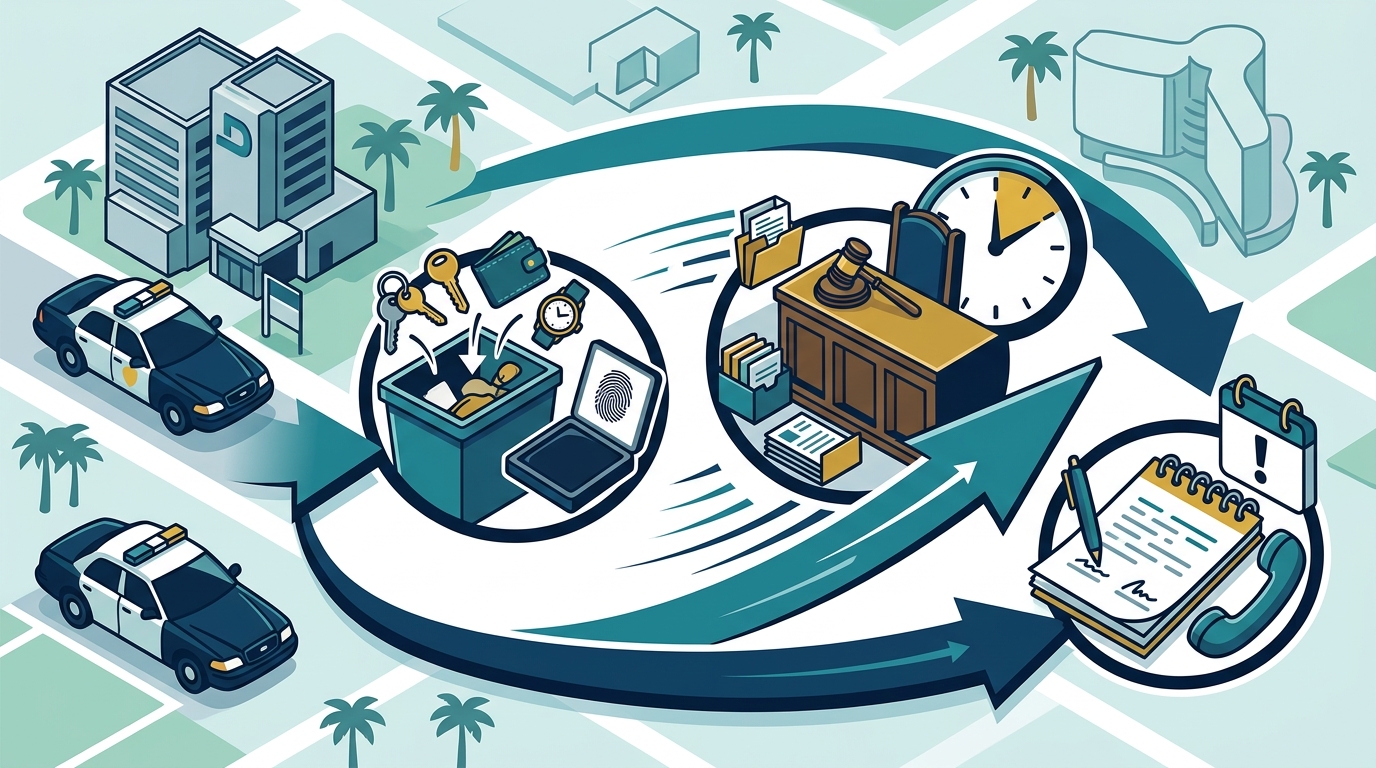
Being arrested is a traumatic and disorienting experience that can derail your life in seconds. In Miami-Dade County, the criminal justice system moves with alarming speed. According to recent data on local court processing times, individuals often face their first court appearance within 24 hours of booking. This rapid timeline means that the decisions you make in those initial critical hours will have a permanent impact on your freedom, your record, and your future. Understanding the procedural landscape is not just helpful; it is essential for survival in the legal system.
The Booking Process and Initial Detention
Immediately following an arrest, you are transported to a county detention facility. In Miami-Dade, this is typically the Miami-Dade Corrections and Rehabilitation (MDCR) facility. The booking process is administrative but invasive. Officers will record your personal information, take photographs, and collect fingerprints. This data is entered into state and federal databases, creating a permanent digital footprint of the arrest event.
During this phase, you are considered a detainee. You have the right to remain silent. Do not speak to law enforcement officers about the details of your case. Anything you say can and will be used against you. The police are not your friends; their job is to build a case. Even if you believe you are innocent, explaining your side to the arresting officer rarely helps and often complicates your defense.
Once booked, you are held in a cell until your first court appearance. The time spent in detention can vary based on the day of the week and the availability of judges. If you are arrested on a Friday, you may not see a judge until Tuesday or Wednesday. This delay can be stressful, but it also provides a window for your attorney to begin investigating the circumstances of your arrest.
The Arthur Hearing and Bond Determination
The Arthur Hearing is a critical milestone in the Miami-Dade criminal justice process. Named after a specific legal precedent, this hearing determines whether you will be released from jail and under what conditions. The primary goal of the Arthur Hearing is to ensure that you will appear for future court dates and that your release does not pose a danger to the community.
During this hearing, the judge reviews the charges against you and the strength of the evidence. The prosecution will argue for high bond or no bond, citing the severity of the crime and your criminal history. Your attorney will argue for reasonable bond, emphasizing your ties to the community, employment status, and lack of prior record.
Bond Hearings and Arthur Hearings are complex legal proceedings. The judge has broad discretion in setting bond amounts. If the judge denies bond, you remain in jail until your case is resolved or until a higher court grants relief. This is why having an experienced attorney present at this stage is vital. A former prosecutor understands how to frame arguments that resonate with judges who were once in the same position as the current prosecutors.
Arraignment and Entering a Plea
After the Arthur Hearing, the next major step is the arraignment. This is the formal reading of the charges against you. At this stage, you are asked to enter a plea: guilty, not guilty, or no contest.
Never plead guilty without consulting a criminal defense attorney. A guilty plea waives your right to a trial and subjects you to the maximum penalties allowed by law. Even if the evidence seems overwhelming, a not guilty plea forces the prosecution to prove their case beyond a reasonable doubt.
During the arraignment, your attorney may also file motions to suppress evidence or dismiss charges. These motions challenge the legality of the arrest or the admissibility of evidence obtained during the investigation. If successful, these motions can significantly weaken the prosecution's case or lead to its dismissal entirely.
Pretrial Strategies and Discovery
Once a not guilty plea is entered, the case enters the pretrial phase. This is where the real work of defense begins. Your attorney will request discovery, which includes all evidence collected by the police. This includes police reports, body camera footage, witness statements, and forensic analysis.
Reviewing the discovery is essential. Your attorney will look for inconsistencies in the police report, violations of your constitutional rights, or weaknesses in the witness testimony. In many cases, the prosecution's case falls apart under this scrutiny. If your attorney identifies significant legal errors, they may file a motion to dismiss the charges.
Additionally, your attorney will engage in plea negotiations with the prosecutor. While the media often portrays plea bargains as the prosecution offering a "deal," the reality is a complex negotiation. Your attorney will leverage the weaknesses in the prosecution's case to seek a reduction in charges or a favorable sentencing recommendation. The Law Office of Adam K. Goodman specializes in these negotiations, using our deep relationships with Miami-Dade prosecutors to achieve the best possible outcomes for our clients.
Trial Preparation vs. Case Resolution
Not all cases go to trial. In fact, the majority of criminal cases in Florida are resolved through plea agreements. However, the threat of a trial is often what drives favorable plea offers. If the prosecution is unwilling to offer a reasonable resolution, your attorney will prepare for trial.
Trial preparation involves selecting a jury, preparing witnesses, and developing a defense strategy. Your attorney will challenge the credibility of prosecution witnesses and present alternative explanations for the events in question. The goal is to create reasonable doubt in the minds of the jurors.
If your case goes to trial, the outcome is determined by a jury of your peers. The burden of proof remains on the prosecution. They must prove every element of the crime beyond a reasonable doubt. If they fail to do so, you must be acquitted. Assault and Battery Defense in Miami and other serious charges require meticulous trial preparation to ensure that every detail is scrutinized.
Key Takeaways for Arrested Individuals
- Immediate Legal Counsel: Contact a criminal defense attorney immediately after arrest. Do not wait for your court date.
- Right to Silence: Exercise your right to remain silent. Do not speak to police without your attorney present.
- Arthur Hearing Importance: The bond hearing determines your freedom before trial. An experienced attorney can argue for lower bond or release on recognizance.
- Discovery Review: Your attorney must review all police evidence to find weaknesses in the prosecution's case.
- No Guilty Pleas: Never plead guilty without a thorough analysis of your case and potential penalties.
- Prosecutor Relationships: Attorneys with prior prosecutorial experience, like Adam K. Goodman, understand how to negotiate effectively with the state.
- Appeals Process: If convicted, you may have grounds for an appeal. Appeals Defense in Miami requires specialized knowledge of appellate law.
Frequently Asked Questions
How long do I have to see a judge after arrest?
In Miami-Dade County, you are generally entitled to a first appearance or Arthur Hearing within 24 hours of arrest, excluding weekends and holidays. This hearing determines your bond status.
Can I get my bond reduced?
Yes, your attorney can file a motion to reduce bond if the initial amount is unreasonably high. Factors such as your ties to the community, employment, and lack of prior record can support a reduction.
What is the difference between assault and battery?
Assault is the intentional threat of violence that causes fear, while battery is the actual physical contact or striking of another person. Both are criminal offenses in Florida with distinct legal definitions.
Do I need a lawyer for a DUI charge?
Yes, a DUI charge can result in license suspension, fines, and jail time. An experienced attorney can challenge the legality of the traffic stop and the accuracy of field sobriety tests.
What happens if I cannot afford a lawyer?
If you cannot afford a private attorney, you may qualify for a public defender. However, public defenders are often overburdened. A private attorney can provide more dedicated attention to your case.
Can charges be dropped before trial?
Yes, charges can be dropped if the prosecution lacks evidence, if there were constitutional violations during the arrest, or if witness credibility is compromised. Your attorney will file motions to seek dismissal.
What is the appeals process?
If convicted, you can appeal the conviction or sentence to a higher court. Appeals focus on legal errors during the trial, not new evidence. Appeals Defense in Miami requires specialized legal expertise.
Contact a Miami Criminal Defense Attorney
If you or a loved one has been arrested in Miami-Dade County, time is of the essence. The decisions made in the first few hours can determine the outcome of your case. Do not face the criminal justice system alone. Contact The Law Office of Adam K. Goodman today for a free consultation. As a former Miami prosecutor, Adam K. Goodman knows how the other side thinks and will fight aggressively to protect your rights and secure the best possible result.