

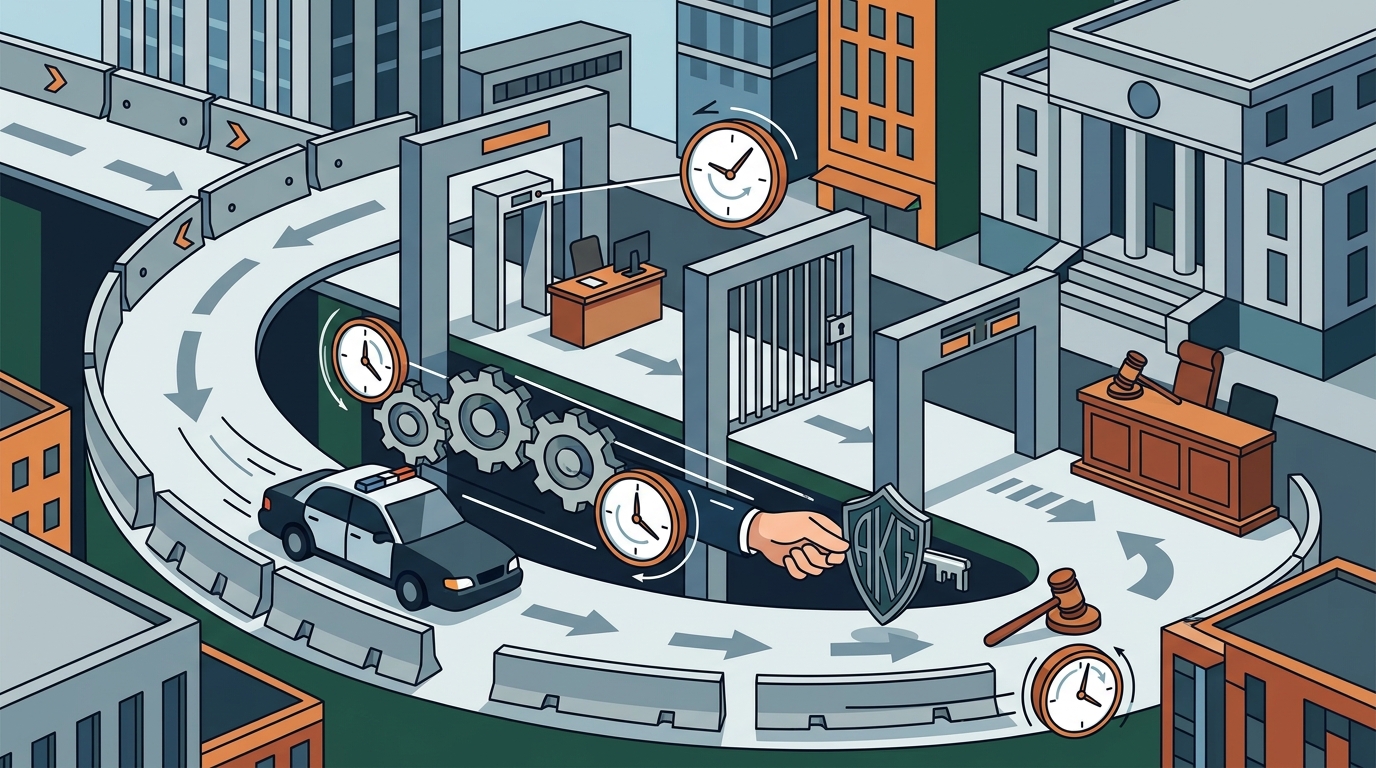
Being arrested is a traumatic and disorienting experience that can instantly upend your life. In Miami-Dade County, the criminal justice system moves with remarkable speed, often leaving defendants with little time to understand their rights or plan a defense. According to recent data on local court operations, the average time between arrest and initial court appearance can be less than 24 hours for many non-bondable offenses. This rapid timeline means that the decisions you make in the first few days are critical to the outcome of your case. Understanding the procedural landscape is not just about legal knowledge; it is about protecting your freedom, your record, and your future.
The Arrest and Booking Process
The journey through the criminal justice system begins the moment law enforcement takes you into custody. In Miami-Dade County, this process is governed by strict protocols designed to secure the individual and inventory their belongings. Booking is the formal administrative process that follows an arrest. It involves recording your personal information, taking photographs, and collecting fingerprints.
During this phase, you are held in a county jail facility. The conditions can be stressful, and the wait for a court date can feel interminable. It is crucial to remember that anything you say to law enforcement or even to fellow inmates can be used against you. The Fifth Amendment protects your right to remain silent, and exercising this right is the first step in protecting your constitutional rights. You are not required to answer questions about the incident that led to your arrest without legal counsel present.
For more details on specific charges, such as assault and battery, it is important to understand that the severity of the initial charge often dictates the speed and nature of your subsequent court appearances.
The First Court Appearance
Your first interaction with the judicial system is typically a hearing before a judge. In Miami-Dade, this is often where the formal charges are read, and the issue of pretrial release is addressed. This stage is critical because it sets the tone for the rest of your case. The judge will determine whether you have probable cause to be detained or if you can be released pending trial.
If you are unable to post bond immediately, you may be held in custody until your next scheduled hearing. During this time, your attorney can begin investigating the facts of the case, reviewing police reports, and identifying potential defenses. The goal is to challenge the prosecution's evidence before it solidifies in the minds of the court.
Understanding Bond Hearings
Bond is the financial guarantee that you will return to court for future proceedings. In Florida, the right to bond is not absolute for all crimes. For many offenses, a bond hearing is required to determine the amount and conditions of your release. Bond hearings are legal proceedings where a judge evaluates the risk of flight and the danger to the community posed by the defendant.
The judge considers several factors, including the severity of the crime, your criminal history, and your ties to the community. If you are deemed a flight risk or a danger, the judge may deny bond entirely. This is where the experience of a former prosecutor becomes invaluable. An attorney who knows how prosecutors build cases can effectively argue for release by highlighting your stability and lack of prior record.
For specialized guidance on these complex hearings, consult our bond hearings and Arthur hearings resources to understand your specific rights.
The Arthur Hearing Explained
An Arthur hearing is a specific type of bond hearing in Florida that occurs when the prosecution alleges that the evidence of guilt is overwhelming or the crime is capital in nature. Named after the case State v. Arthur, this hearing places a heavy burden on the defense to prove that the state cannot prove the case beyond a reasonable doubt.
If you are facing serious charges, such as federal crimes or major felonies, an Arthur hearing may be scheduled. The standard of proof here is significantly higher than in a standard bond hearing. Your attorney must present evidence and legal arguments to show that the state's case is weak. This is a high-stakes legal battle that requires precise preparation and a deep understanding of Florida evidentiary rules.
Arraignment and Entering a Plea
Once bond is addressed, the next major step is the arraignment. This is the formal reading of the charges against you, and you are asked to enter a plea. Your options are typically guilty, not guilty, or no contest. Entering a not guilty plea preserves your right to a trial and forces the prosecution to prove its case.
It is rarely advisable to plead guilty at this stage without a thorough review of the evidence. A guilty plea waives your right to appeal and results in a permanent criminal record. Even if you believe you are guilty, there may be legal defenses or opportunities for plea negotiations that could result in a reduced charge or dismissal.
Understanding the nuances of different charges, such as drug charges, is essential because the penalties and potential defenses vary widely depending on the substance and quantity involved.
Discovery and Pre-Trial Motions
After the arraignment, the discovery phase begins. This is where the prosecution is required to share all evidence it intends to use against you. This includes police reports, witness statements, body camera footage, and forensic results. Your attorney will meticulously review this material for inconsistencies, procedural errors, or constitutional violations.
If the police violated your rights during the arrest or investigation, your attorney can file a motion to suppress evidence. For example, if you were subjected to an unlawful search, the evidence obtained may be excluded from trial. This phase is where the real work of defense happens. It requires a former prosecutor's insight to anticipate the state's strategy and dismantle it before it reaches the jury.
For those facing serious allegations, understanding white collar crime defenses can be particularly relevant, as these cases often hinge on complex financial records and intent.
Trial vs. Settlement Outcomes
Not every case goes to trial. In fact, the majority of criminal cases in Miami-Dade County are resolved through plea negotiations. The prosecution may offer a plea deal in exchange for a guilty plea, often involving reduced charges or sentencing recommendations. Your attorney will negotiate these deals to achieve the best possible outcome for you.
However, if a fair plea deal cannot be reached, the case proceeds to trial. At trial, the burden of proof remains on the prosecution. They must prove your guilt beyond a reasonable doubt. A jury of your peers will decide your fate. The outcome of a trial can range from acquittal to conviction and sentencing. Having an attorney who is experienced in murder defense or other serious felony trials is crucial for navigating this high-pressure environment.
Key Takeaways
- Immediate Legal Counsel: Contact a criminal defense attorney immediately after arrest to protect your rights and guide your interactions with law enforcement.
- Right to Remain Silent: Exercise your Fifth Amendment right to remain silent. Do not speak to police or inmates without your attorney present.
- Bond Complexity: Bond hearings and Arthur hearings are critical stages where your freedom is determined by legal arguments, not just financial ability.
- Discovery is Key: The review of police reports and evidence during the discovery phase often reveals weaknesses in the prosecution's case.
- Former Prosecutor Insight: An attorney with prior prosecution experience, like Adam K. Goodman, understands how the state builds cases and can effectively challenge them.
- Plea Negotiations: Most cases are resolved through plea deals, but a strong defense strategy is needed to negotiate favorable terms.
- Trial Readiness: Being prepared for trial often leads to better plea offers, as prosecutors know you are willing and able to fight.
Frequently Asked Questions
How long do I have to post bond after arrest?
In Miami-Dade County, you are typically entitled to a bond hearing within 24 hours of arrest if you are held in custody. However, the actual posting of bond depends on the court's schedule and the amount set by the judge.
What is the difference between an assault and a battery charge?
Assault is the intentional act of placing someone in fear of imminent harm, while battery involves the actual physical contact or striking of another person. Both are serious offenses with distinct legal definitions under Florida Statute 784.011 and 784.03.
Can I get my criminal record expunged in Florida?
Yes, under certain conditions. Florida law allows for the sealing or expunging of criminal records if the charges were dropped, you were acquitted, or you received a deferment of adjudication. However, some serious offenses are ineligible. Consult our sealing and expunging resources for more details.
What happens if I miss a court date?
Missing a court date results in a bench warrant being issued for your arrest. You will be taken into custody, and your bond may be revoked. It is critical to attend all scheduled hearings or have your attorney appear on your behalf.
Do I need a lawyer for a DUI charge?
Yes, a DUI charge can result in license suspension, fines, and jail time. A skilled attorney can challenge the validity of the traffic stop and the accuracy of field sobriety tests. Learn more about DUI defense strategies.
What is an Arthur hearing?
An Arthur hearing is a bond hearing where the prosecution claims the evidence of guilt is overwhelming. The defense must prove that the state cannot meet its burden of proof to secure release.
How does a former prosecutor help my defense?
A former prosecutor understands the internal workings of the state's attorney's office. They know how cases are built, what evidence is valued, and how to negotiate effectively with prosecutors.
Contact a Miami Criminal Defense Attorney
If you or a loved one has been arrested in Miami-Dade County, time is of the essence. The decisions you make in the early stages of your case can have lasting consequences. Do not face the criminal justice system alone. The Law Office of Adam K. Goodman offers aggressive defense and strategic guidance tailored to your unique situation.
As a former Miami-Dade Prosecutor and Chief of Litigation, Adam K. Goodman brings unparalleled insight and respect within the legal community. He is dedicated solely to criminal defense, ensuring that every client receives focused and effective representation. Contact us today for a free consultation to discuss your options and protect your constitutional rights.
Click here to contact the Law Office of Adam K. Goodman or call (305) 482-3265 to schedule your consultation.