
Getting someone out of jail in Miami-Dade fast requires posting the required bond amount or securing a bail bond within the first 24 to 48 hours after arrest. The Law Office of Adam K. Goodman explains the immediate steps families must take to navigate the Miami-Dade criminal justice system. This guide covers the legal process for pretrial release, the differences between cash bonds and surety bonds, and how to effectively use bail bond services to secure a defendant's freedom.
Understanding the Arrest and Booking Process
When a person is arrested in Miami-Dade County, the clock starts immediately. The defendant is taken into custody and processed at a local jail facility. This process involves fingerprinting, photographing, and inventorying personal property. The most critical legal milestone occurs when the defendant is brought before a judge. Under Florida state law, a person in custody must appear before a judge within 24 to 48 hours of arrest. This initial hearing determines whether the defendant will be released or held in custody pending trial.
During this hearing, the judge sets the conditions for pretrial release. These conditions generally fall into three categories: bail and surety bonds, conditions of pretrial release without monetary bonds, and release on recognizance. Understanding these categories is essential for anyone trying to secure a defendant's release quickly. The judge has the authority to set a specific dollar amount for bail based on the severity of the charges and the defendant's flight risk. If the judge determines the defendant is a danger to the community or a flight risk, they may deny bond entirely.
Bond Posting Methods
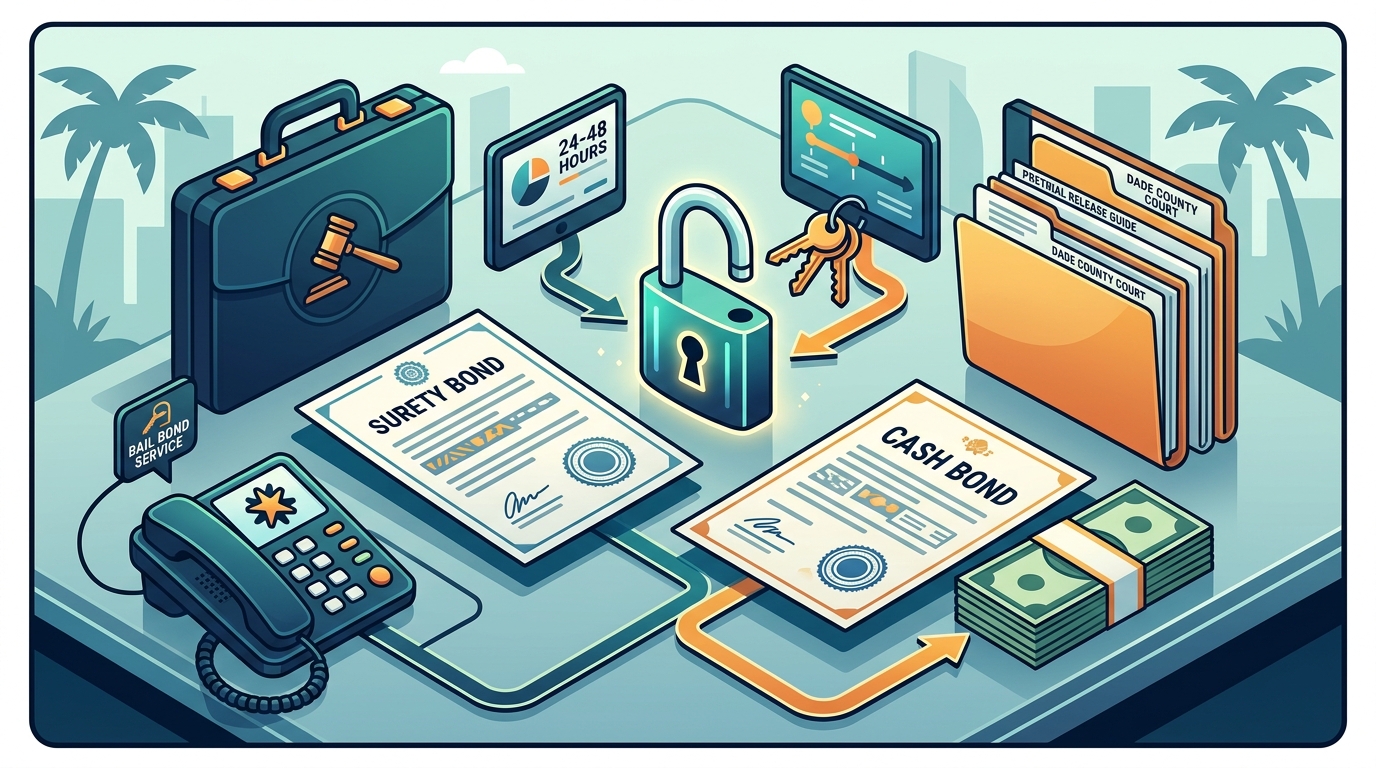
Bond posting is the financial mechanism used to secure a defendant's release from jail. The method chosen depends on the type of bond set by the judge and the financial resources available to the defendant or their family. Florida law provides several distinct ways to post bond, each with different implications for the defendant and their supporters.
Cash Bonds
A cash bond is a full monetary amount paid directly to the court. When a cash bond is posted, the full amount is held by the court until the case concludes. If the defendant complies with all court dates and conditions, the money is refunded at the end of the case. This method is often used for lower-level offenses where the bond amount is manageable. It is the most straightforward way to secure release but requires the full financial outlay upfront.
Surety Bonds
A surety bond is a financial guarantee provided by a licensed bail bondsman. In this arrangement, the defendant or their family pays a non-refundable premium, typically a percentage of the total bond amount, to the bondsman. The bondsman then guarantees the full bond amount to the court. If the defendant appears for all court dates, the bondsman is released from the obligation. If the defendant fails to appear, the bondsman is liable for the full amount and may use agents to locate the defendant. This is the most common method for securing release on higher bond amounts.
Release on Recognizance
Release on recognizance, often abbreviated as ROR, is a form of pretrial release that does not require any monetary payment. The defendant is released based on their promise to appear in court. This option is typically reserved for defendants charged with minor offenses who have strong community ties and a low risk of flight. It is the fastest and most cost-effective method of release, but it is not available for all charges.
Bail Bondsman Services
Bail bondsmen play a crucial role in the Miami-Dade criminal justice system. They provide the financial backing necessary for defendants who cannot afford to pay the full bond amount in cash. Working with a licensed bail bondsman can significantly expedite the release process. However, it is important to understand the terms and conditions of a surety bond before signing any agreement.
How Bail Bondsmen Operate
Bail bondsmen are licensed professionals who post surety bonds on behalf of defendants. They charge a non-refundable premium, which is regulated by the state of Florida. This premium is typically a percentage of the total bond amount. In exchange for this fee, the bondsman assumes the financial risk of the defendant's appearance in court. The bondsman may also require collateral, such as property or vehicles, to secure the bond. This collateral protects the bondsman in the event that the defendant fails to appear.
Choosing a Reliable Bondsman
When selecting a bail bondsman, it is important to choose a licensed and reputable professional. A reliable bondsman will clearly explain the terms of the bond, including the premium, any collateral requirements, and the consequences of failing to appear. They should also provide 24/7 availability, as arrests can happen at any time. The Law Office of Adam K. Goodman often works with clients to coordinate with bail bondsmen to ensure a smooth and efficient release process. This coordination can help avoid delays and ensure that all legal requirements are met.
Non-Bondable Offenses and Restrictions
Not all defendants are eligible for pretrial release. Florida law designates certain offenses as non-bondable, meaning the judge cannot set a bond for these charges. These offenses are typically capital offenses or offenses punishable by life imprisonment. Examples of non-bondable offenses include burglary with assault or battery, armed burglary, armed robbery with a firearm, and armed sexual battery. If a defendant is charged with a non-bondable offense, they will remain in custody until their trial or until the charges are reduced or dismissed.
Even for bondable offenses, a judge may deny bond if they determine the defendant is a significant flight risk or a danger to the community. In such cases, the defendant may be held in custody without the option of posting bond. This is a serious legal situation that requires immediate attention from a criminal defense attorney. The Law Office of Adam K. Goodman has experience handling complex cases where bond is denied and can help clients explore alternative legal strategies to secure release.
Legal Strategy and Pretrial Release
Securing a defendant's release is not just about posting bond. It is also about developing a strong legal strategy that addresses the underlying charges. A skilled criminal defense attorney can help negotiate with prosecutors to reduce charges or seek a lower bond amount. This can make it easier for the defendant to secure release and prepare for their case. The Law Office of Adam K. Goodman, led by a former Miami-Dade prosecutor, brings unique insight into how prosecutors build cases and how to identify weaknesses in the State's evidence.
Attorneys can also file motions for pretrial release without monetary bonds, arguing that the defendant is not a flight risk or a danger to the community. These motions require a thorough understanding of the defendant's background, community ties, and the specific circumstances of the case. A well-crafted motion can persuade a judge to release the defendant on conditions other than a cash bond. This is particularly important for defendants who cannot afford to post bond but are not charged with non-bondable offenses.
Key Takeaways
- Defendants in Miami-Dade must appear before a judge within 24 to 48 hours of arrest.
- Cash bonds require the full amount to be paid to the court and are refunded if the defendant complies with all conditions.
- Surety bonds involve a non-refundable premium paid to a licensed bail bondsman.
- Release on recognizance is a non-monetary form of pretrial release available for minor offenses.
- Non-bondable offenses, such as armed robbery, do not allow for pretrial release.
- Working with a criminal defense attorney can help negotiate lower bond amounts or seek alternative release conditions.
- Choosing a licensed and reputable bail bondsman is essential for a smooth release process.
- The Law Office of Adam K. Goodman provides strategic criminal defense to protect clients' rights and secure their freedom.
Frequently Asked Questions
How long does it take to get someone out of jail in Miami-Dade?
The time it takes to secure release depends on the type of bond and the court's schedule. If a cash bond is posted, release can occur within a few hours. If a surety bond is used, the process may take slightly longer due to the need to coordinate with a bondsman. The initial hearing must occur within 24 to 48 hours of arrest, which sets the timeline for the release process.
What is the difference between a cash bond and a surety bond?
A cash bond requires the full bond amount to be paid directly to the court, with a refund if the defendant complies with all conditions. A surety bond involves paying a non-refundable premium to a bail bondsman, who then guarantees the full bond amount to the court. The surety bond is the more common method for higher bond amounts.
Can I get someone out of jail without paying bond?
Yes, if the judge grants release on recognizance. This is a non-monetary form of pretrial release based on the defendant's promise to appear in court. It is typically available for minor offenses and defendants with strong community ties. A criminal defense attorney can file a motion for pretrial release without monetary bonds if appropriate.
What happens if the defendant fails to appear in court?
If the defendant fails to appear, the bond is forfeited. For a cash bond, the full amount is lost. For a surety bond, the bail bondsman is liable for the full amount and may use agents to locate the defendant. The defendant may also face additional criminal charges for failure to appear.
Are all offenses eligible for bond?
No, Florida law designates certain offenses as non-bondable, such as capital offenses and offenses punishable by life imprisonment. Examples include armed robbery and armed sexual battery. Defendants charged with these offenses cannot be released on bond and must remain in custody until their trial.
How can a criminal defense attorney help with the release process?
A criminal defense attorney can help negotiate with prosecutors to reduce charges or seek a lower bond amount. They can also file motions for pretrial release without monetary bonds and provide strategic guidance on the best way to secure release. The Law Office of Adam K. Goodman has experience handling complex cases and can help clients navigate the legal process effectively.
What should I do if I am arrested in Miami-Dade?
If you are arrested, it is important to remain silent and request an attorney. Do not discuss the details of the case with anyone other than your lawyer. Contact a criminal defense attorney as soon as possible to begin the process of securing your release and developing a defense strategy. The Law Office of Adam K. Goodman is available 24/7 to assist clients in Miami-Dade and Broward County.
Conclusion
Getting someone out of jail in Miami-Dade fast requires a clear understanding of the legal process and the available options for pretrial release. Whether you choose to post a cash bond, work with a bail bondsman, or seek release on recognizance, acting quickly and strategically is essential. The Law Office of Adam K. Goodman is dedicated to helping clients navigate the criminal justice system and protect their constitutional rights. With a former Miami-Dade prosecutor at the helm, the firm brings unique insight into how to build a strong defense and secure the best possible outcome. If you or a loved one is facing criminal charges in Miami-Dade or Broward County, contact the Law Office of Adam K. Goodman today for a consultation.